
Motorized shades are usually sold as a convenience. In North Texas they are closer to a mechanical system, like the air conditioning they take pressure off. Here are the five jobs they do in a Dallas-Fort Worth home that they would not have to do anywhere milder, and what makes each one work.
The common thread is timing. A shade that is in the right place at the right hour, every day, without anyone remembering, does more than the most expensive fabric left in the wrong position. That is the whole case for the motor.
1. They take the heat before the thermostat sees it
Sun through glass warms a room the way it warms a parked car. On a west wall in July the gain arrives in the late afternoon, right when the grid is strained and the air conditioning is already running flat out. Closing the blinds by hand works, if you are home, and if you do not mind living in the dark for four hours.
A motorized shade on an astronomical schedule knows where the sun is on every day of the year. It lowers the west side as the afternoon builds, raises it as the sun drops, and leaves the north side alone. Add a sun sensor and it reacts to an overcast day instead of closing out of habit. The room stays bright, the thermostat sees a smaller load, and nobody has to remember anything.
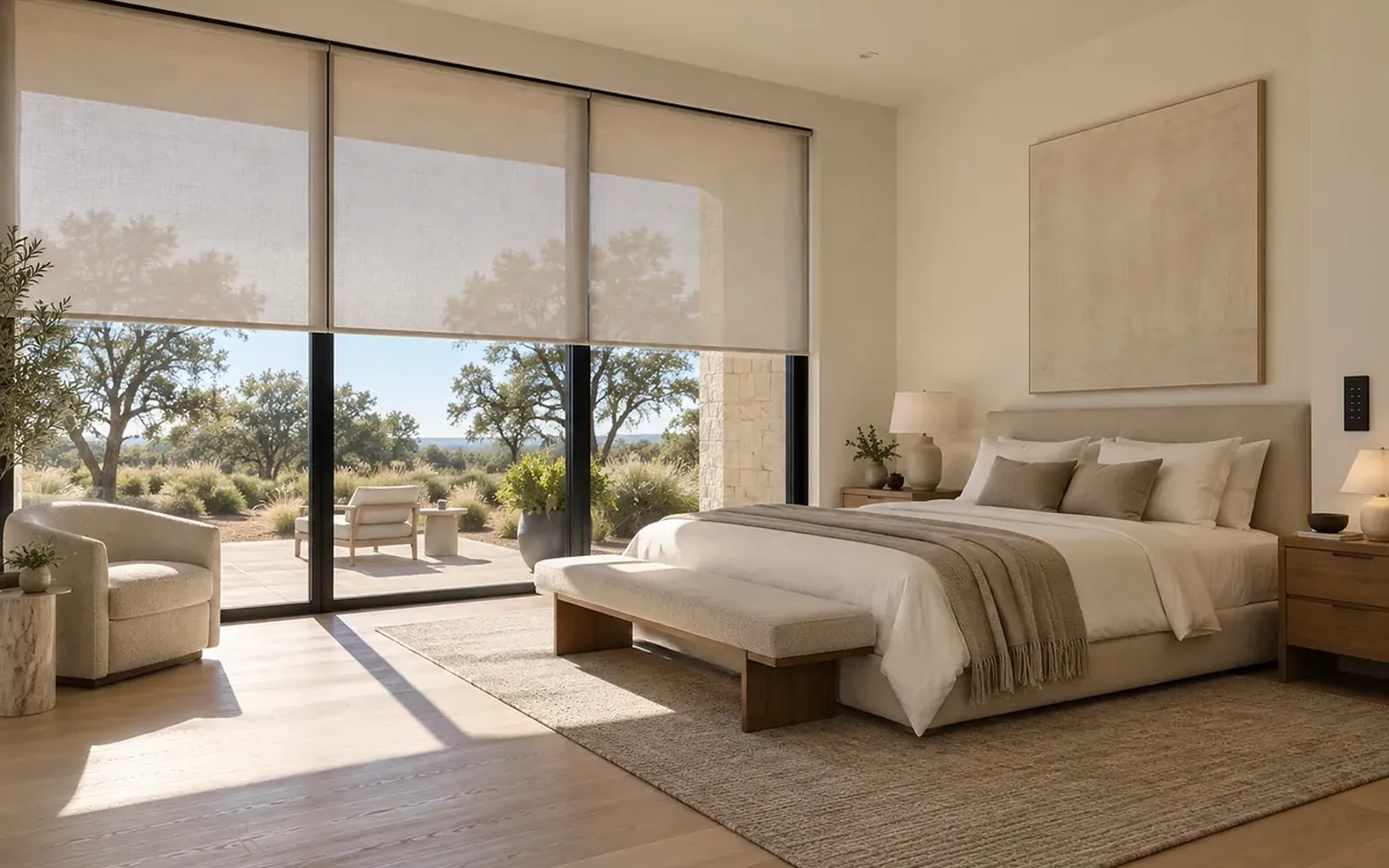
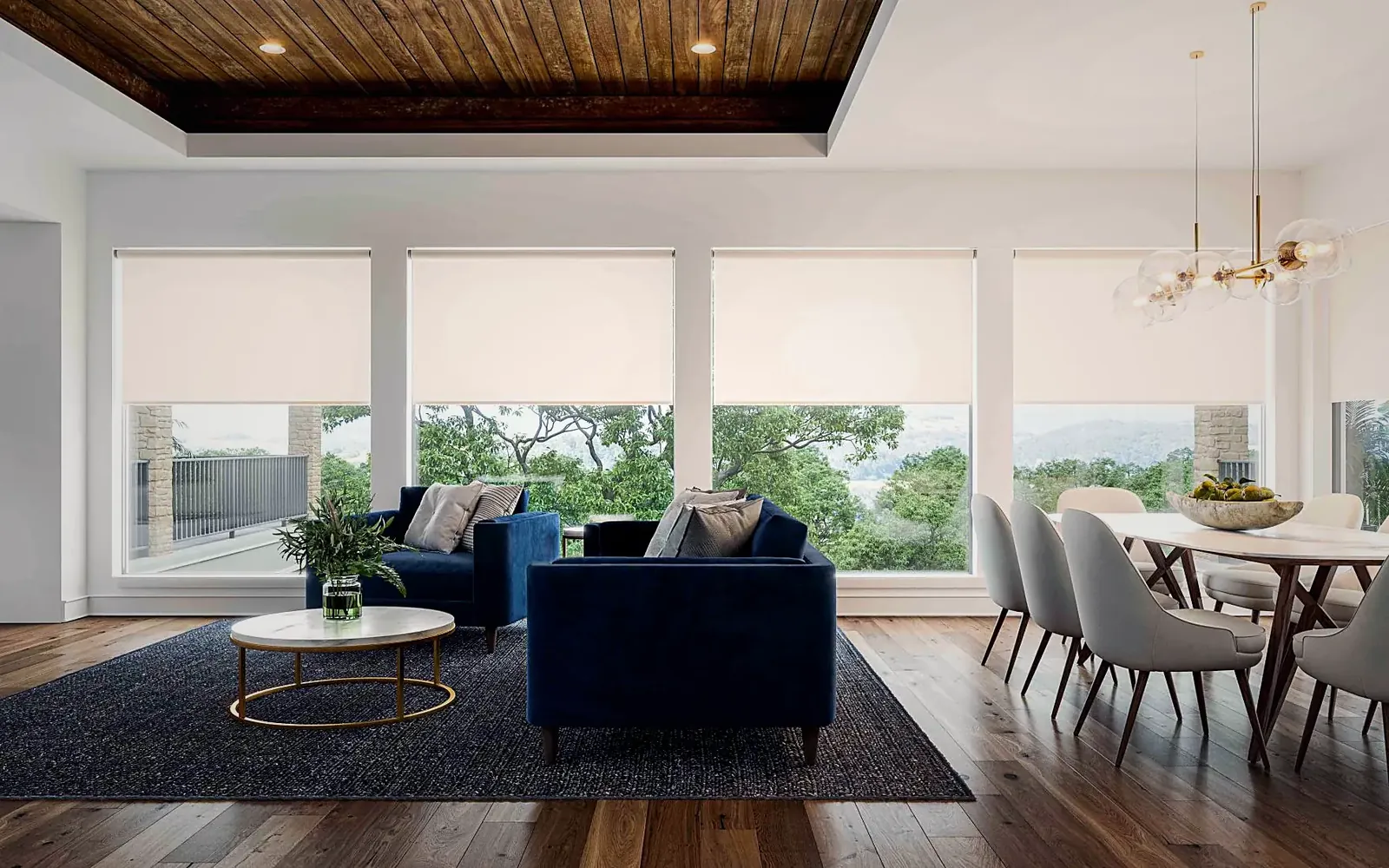
Fabric decides how much you give up. Solar screen fabrics are woven with a small openness, a few percent, so they cut glare and most of the heat while you still see the yard. Cellular fabrics trap air in honeycomb pockets and insulate better, which suits bedrooms and rooms you want dark. Many homes layer the two: a solar shade for the day and a blackout or a drape behind it for the night. Because the shades share a platform with the rest of the home, the climate schedule and the shade schedule are one plan.
Stop the sun at the glass. Once the heat is inside the room, only the air conditioning can remove it, and that is the expensive way.
2. They stop the slow fading of everything near a window
Ultraviolet light does most of the damage, but visible light and heat finish the job. Hardwood floors lighten in a stripe where the sun lands each afternoon. Rugs fade on one side. Leather dries, art pales, and upholstery loses its color a shade at a time, so slowly that nobody notices until a sofa is moved. North Texas homes get more of this than most, because the sun is strong and the windows are large.
Window film helps but cannot change its mind at six in the evening. A shade can. It drops across the hours when the sun is on the floor and rises when the angle changes, and it does that in the rooms you rarely enter, which are exactly the rooms where fading goes unseen. Solar fabrics block most of the ultraviolet even at a low openness, so protection does not depend on blackout. For a whole-home shade plan we map which windows get direct sun in which season and set schedules by the sun's position, not by a single clock time.
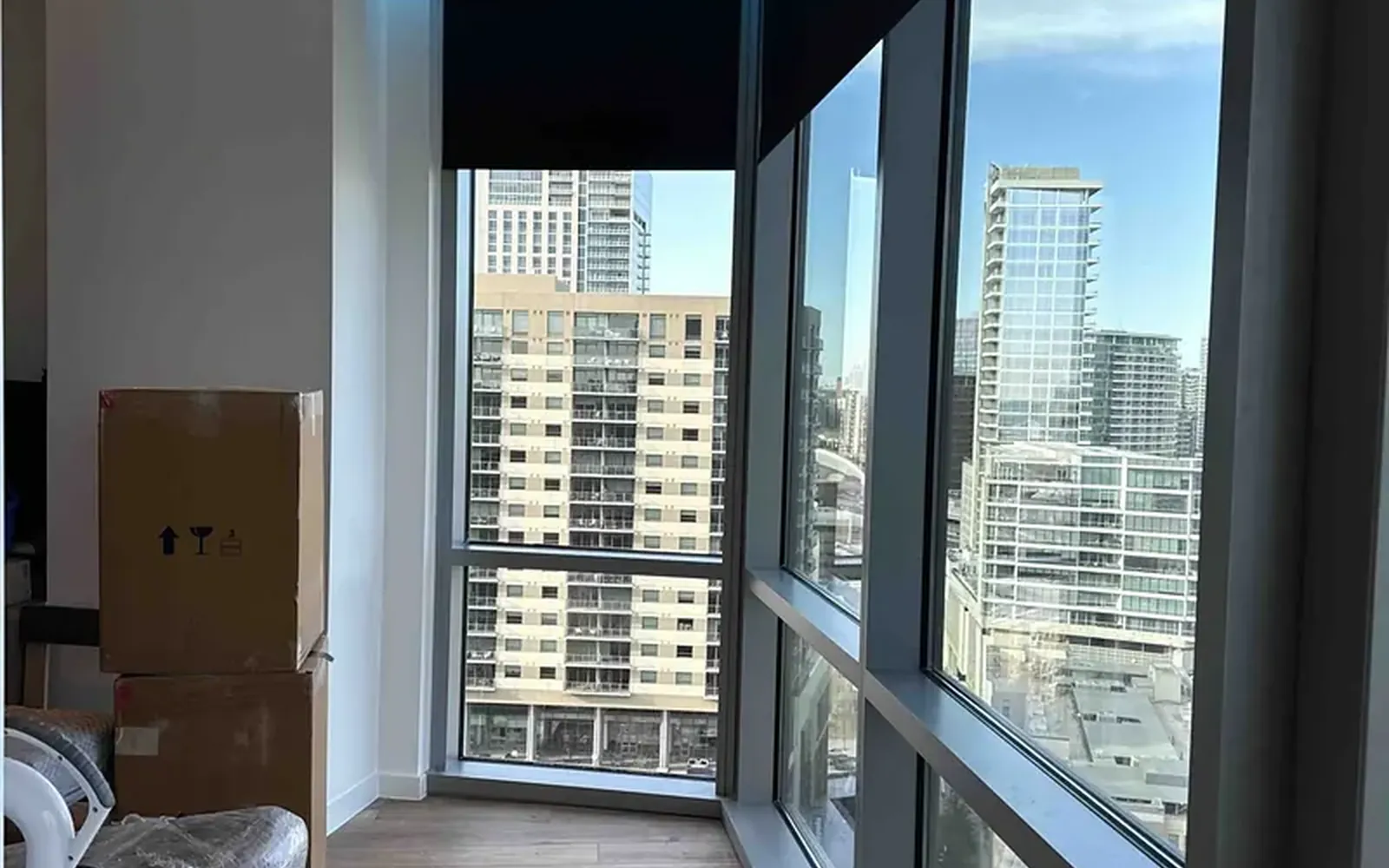
3. They keep houseplants and pets comfortable
Most houseplants want bright, indirect light. What a south or west window delivers in a Texas summer is neither indirect nor gentle, and scorched leaves are the result. Sheer and solar fabrics turn that into filtered light plants can use all day. A simple schedule raises the shade for the soft morning sun, lowers it through the harsh hours and opens again in the evening. The same logic keeps a dog's favorite patch of floor from turning into a hot plate while you are at work.
4. They make an empty house look lived in
A house with every shade frozen in one position for a week reads as empty from the street. A house whose shades drop at dusk, rise in the morning and shift during the day reads as occupied. Paired with lighting that follows your usual evening pattern, the effect is convincing because it is literally the pattern you live by, replayed while you are gone.
The shades also handle privacy without anyone thinking about it. At dusk, when the lights come on and the glass turns into a window onto your living room, the street-facing shades lower on their own. The driveway camera and the door locks in a security plan are there for the rare bad night. The shades and lights are what quietly make it less likely.
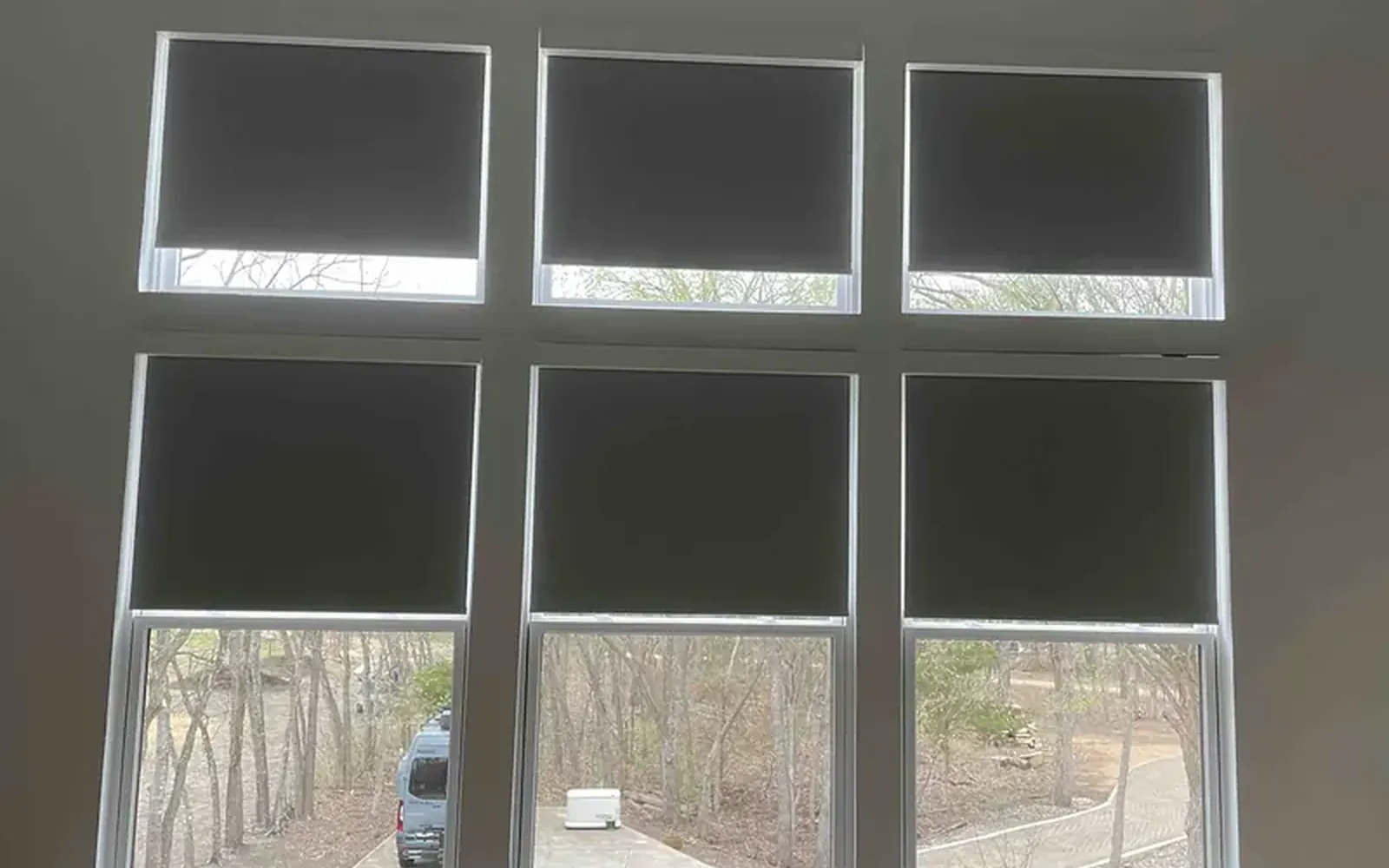
5. They remove a chore you do several times a day
Count the windows in a modern North Texas home. A great room with two stories of glass, clerestory windows nobody can reach, a bank of sliders onto the patio, a row of bedroom windows upstairs. Nobody adjusts all of those by hand, which means most of them stay wherever they were on move-in day. Motorized shades put the entire house in one press from a keypad, a phone or a voice command, and more often in no press at all.
- Good Morning. Bedroom shades rise with the alarm, slowly, so the room wakes with daylight instead of a buzzer.
- Movie Night. Family room shades drop, lights dim, and the glare on the screen is gone before the trailers end.
- Goodnight. Every street-facing shade down, in one press from the bedside.
There are no cords, which matters in a house with small children and in rooms where a cord would hang across a sofa. The same motors run patio screens, so the covered porch gets shade in August and a view in October. For how shades fit alongside lighting and climate, see what homeowners automate first.
What to do next
If you are building, ask for low-voltage power at the head of every window you might ever shade. It costs little during framing, and wired motors from Lutron or Savant are nearly silent and never need charging; at WH Technologies we coordinate this with builders as a matter of routine. In an existing home, rechargeable motors cover most windows with no wiring at all. In both cases, look at fabric samples in the actual room, at the hour the sun is a problem. A fabric that looks right in a showroom at ten in the morning can look very different against a Texas sunset.
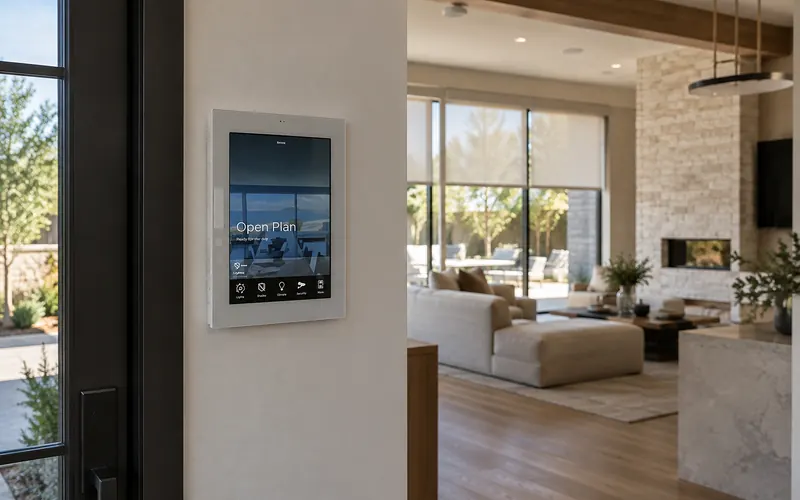
What homeowners automate first, and why it sticks
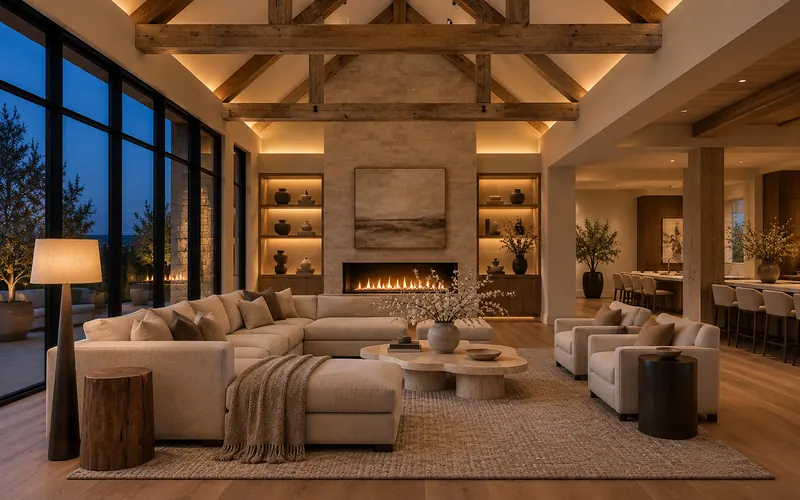
How light changes the way a home feels
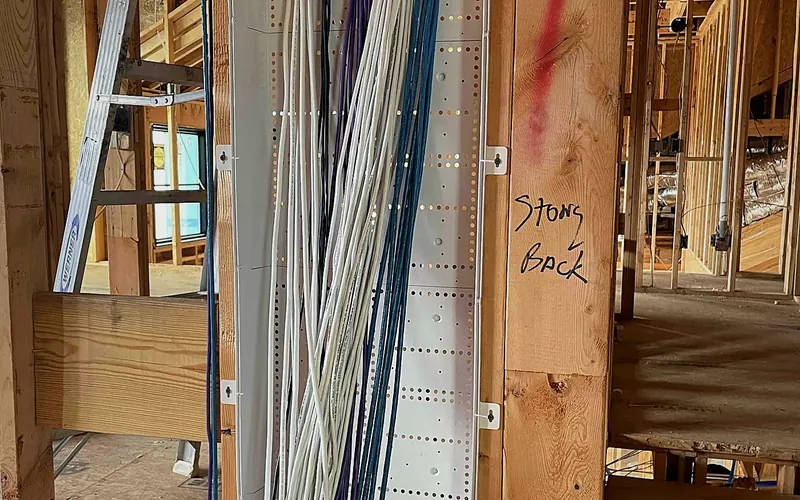
Do smart homes need pre-wiring? What to run before drywall
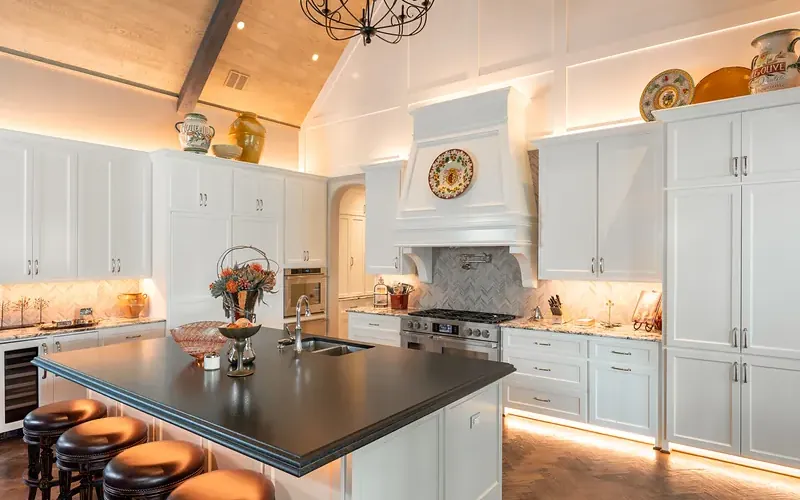
Are all LED tape lights the same?
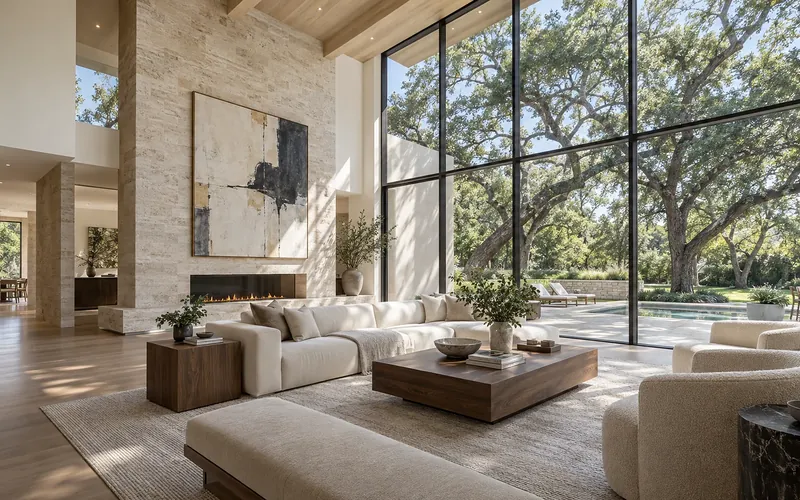
Why lighting design should be your first design decision
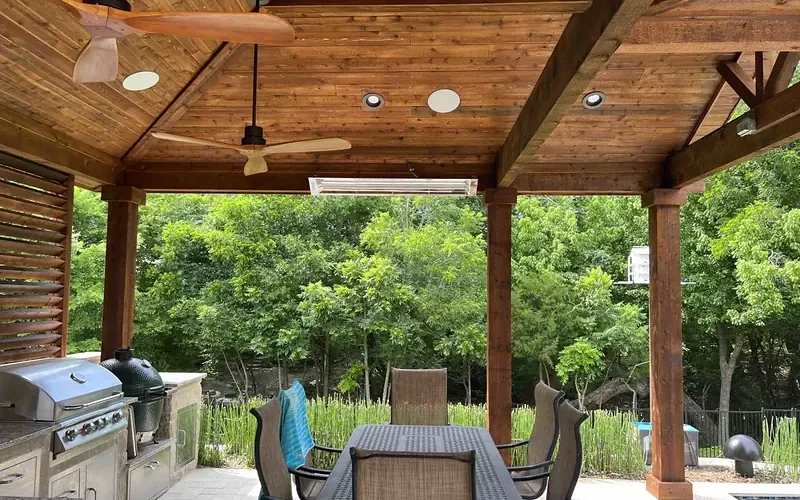
Outdoor audio done right: how many speakers do you really need?
I have a dog. That's enough security, right?
The beginner's guide to energy management for Texas homeowners
Don't count wired out: when hybrid home networks work best
4 critical areas to consider in a home theater design
Why hire a professional for your home theater installation
Why your backyard needs a proper outdoor TV installation
Is it time to upgrade your lighting? Five signs the answer is yes
Why you should trust a professional installer with home automation

Music and light: the two systems that decide how a restaurant feels
Ready for technology that simply works?
Design, installation and support by one team in Allen, serving Dallas-Fort Worth since 2019.