
Ask how many speakers a backyard needs and the honest answer is: more than you think, each one playing more quietly than you expect. Good outdoor audio is a set of small speakers spread through the space, so the music sits at the same comfortable level by the pool, at the table and on the lawn, and the neighbors hear almost nothing.
The mistake almost everyone makes
When we first walk a backyard with a client, the brief is usually the same: keep it simple, we do not want to bother the neighbors, a couple of speakers will do. The instinct is right. The solution is backwards.
Two speakers on the house wall have to throw sound across the whole yard. To be heard at the pool they are loud at the patio, and to be comfortable at the patio they are inaudible at the pool. So the volume creeps up. The speakers start to strain and sound harsh, the people nearest them move away, and the sound carries over the fence because that is the only direction left for it to go.
The fix is more speakers, each one small, each one close to the people listening, each one turned down. When a speaker only has to cover the few yards around it, it never works hard. The level stays even from one end of the yard to the other, and because nothing is loud, very little escapes the property. Instead of hearing where the music is coming from, you simply notice that it is there.
If you can point at the speaker that is playing, there are not enough of them. The goal is music you cannot locate.
Why a Texas backyard is a hard room
Indoors, walls and ceilings reflect sound back to you. Outdoors there is nothing to reflect. Sound leaves the speaker, spreads out and keeps going, and every time you double the distance from it you lose a large share of the level. That is why the far corner of the yard is always quiet while the seat under the speaker is too loud.
North Texas adds its own problems. Outdoor spaces here are big: an open lawn, a pool, a covered patio and an outdoor kitchen on a single lot is normal. Most surfaces are hard, stone paving, retaining walls, brick and glass, and they bounce sound around until it is bright and uneven. And the equipment lives in summer heat, storms and sprinklers, so the speakers, the cable and every connection have to be rated for it.
None of this makes outdoor audio difficult. It makes it something to design rather than something to buy.
Placement by zone
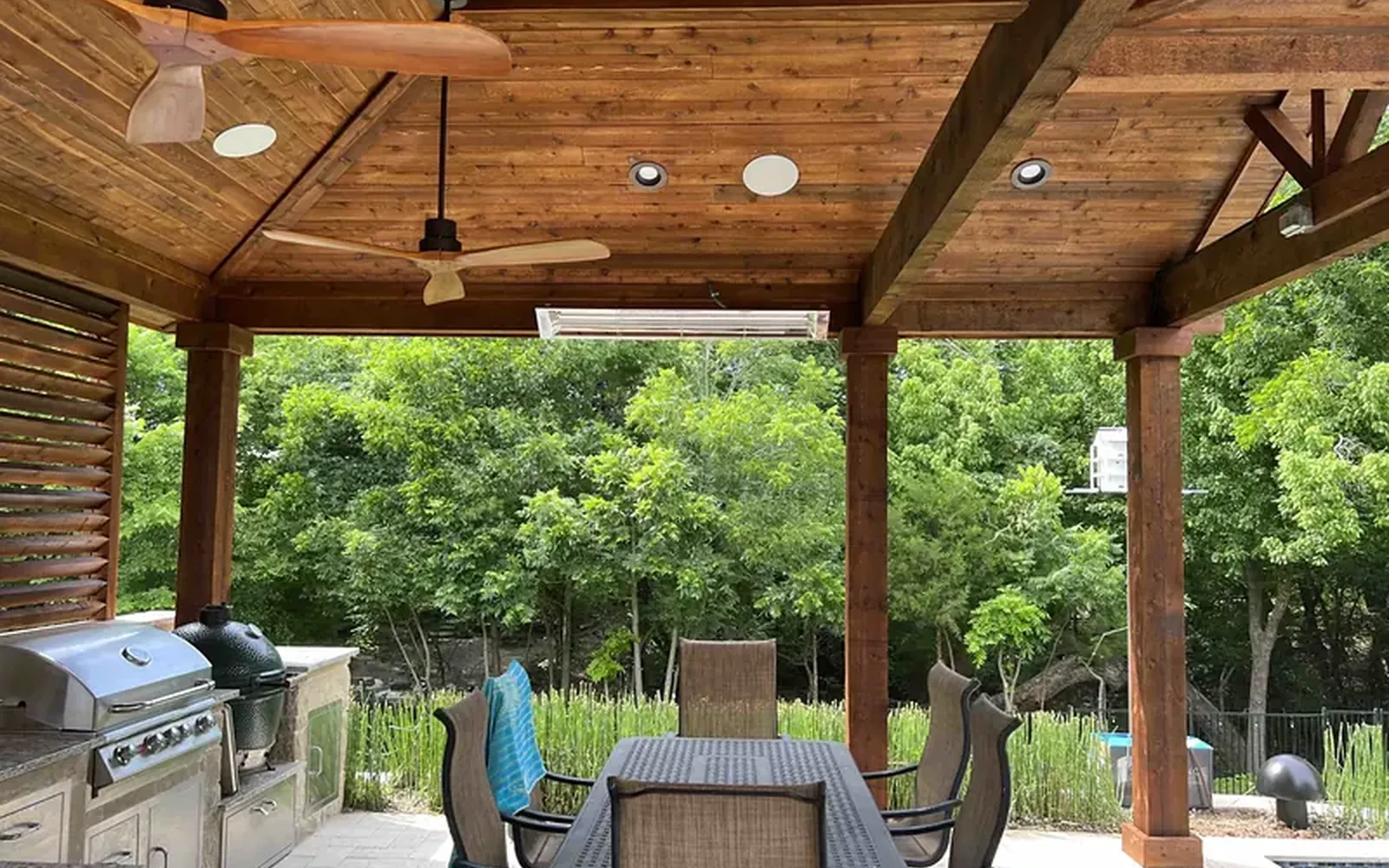
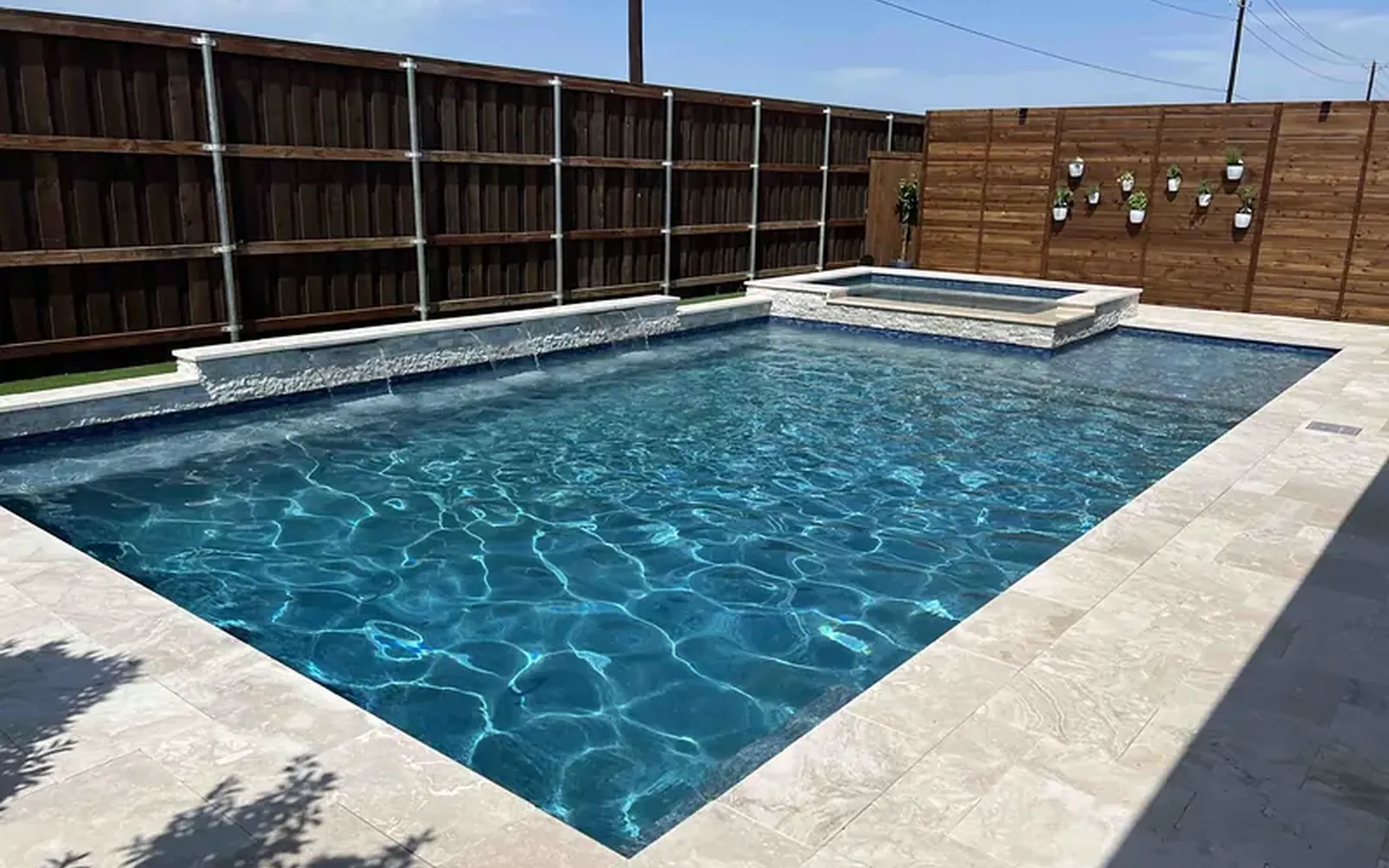
The first step is not choosing speakers, it is drawing zones. Most Dallas-Fort Worth backyards have three or four: the covered patio or outdoor kitchen, the pool deck, the lawn, and often a fire pit or a side garden. Each zone gets its own coverage and its own volume control, because the people at the grill and the people in the pool rarely want the same level.
- Keep the distance short. Satellite speakers are spaced so that every listener is near one. Too far apart and you get hot spots and gaps; spaced correctly, the coverage overlaps and the level barely changes as you walk.
- Aim inward. Speakers at the edges of the property point back toward the house and the people. Sound that starts at the fence and travels in is sound that does not reach the neighbor.
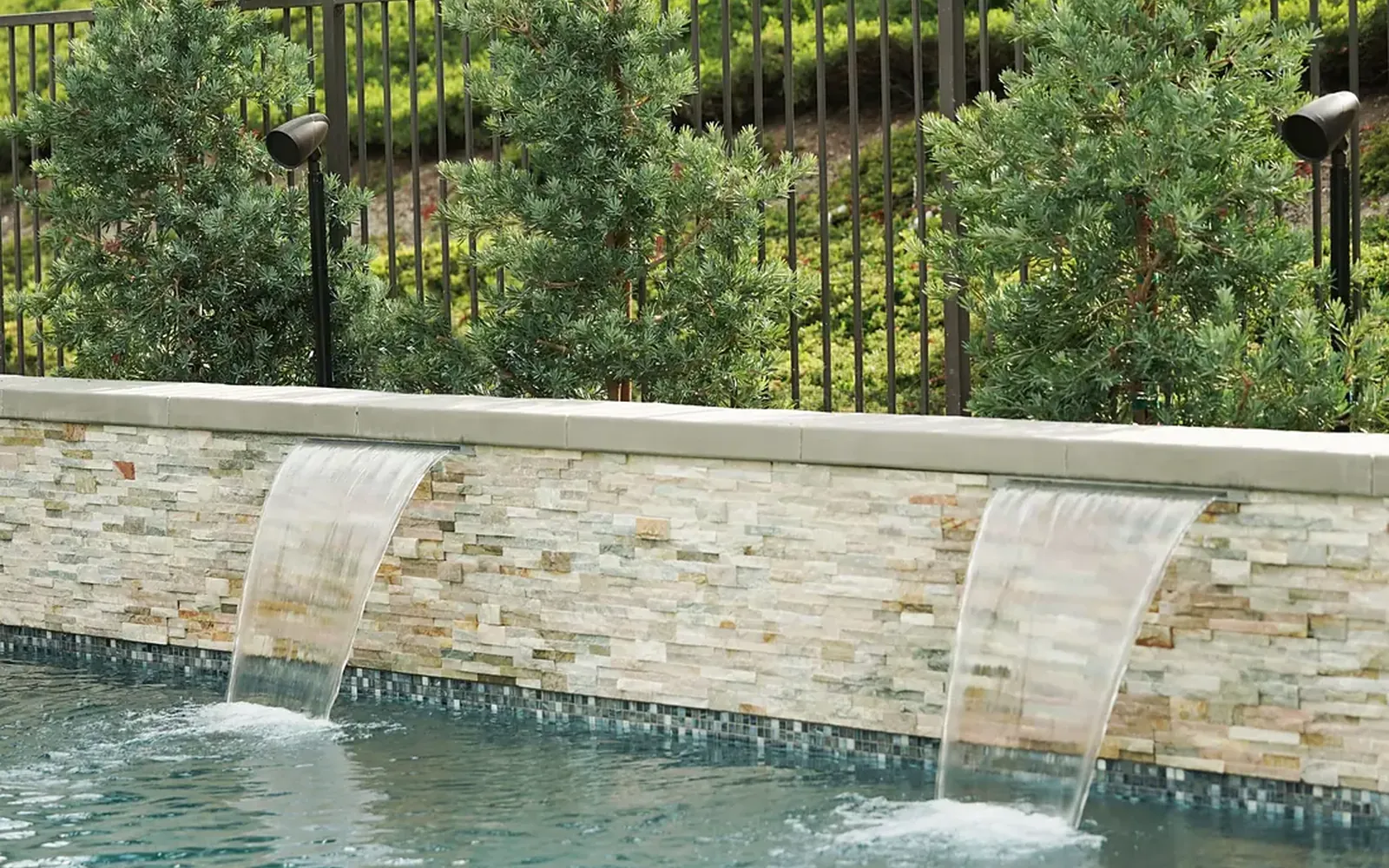
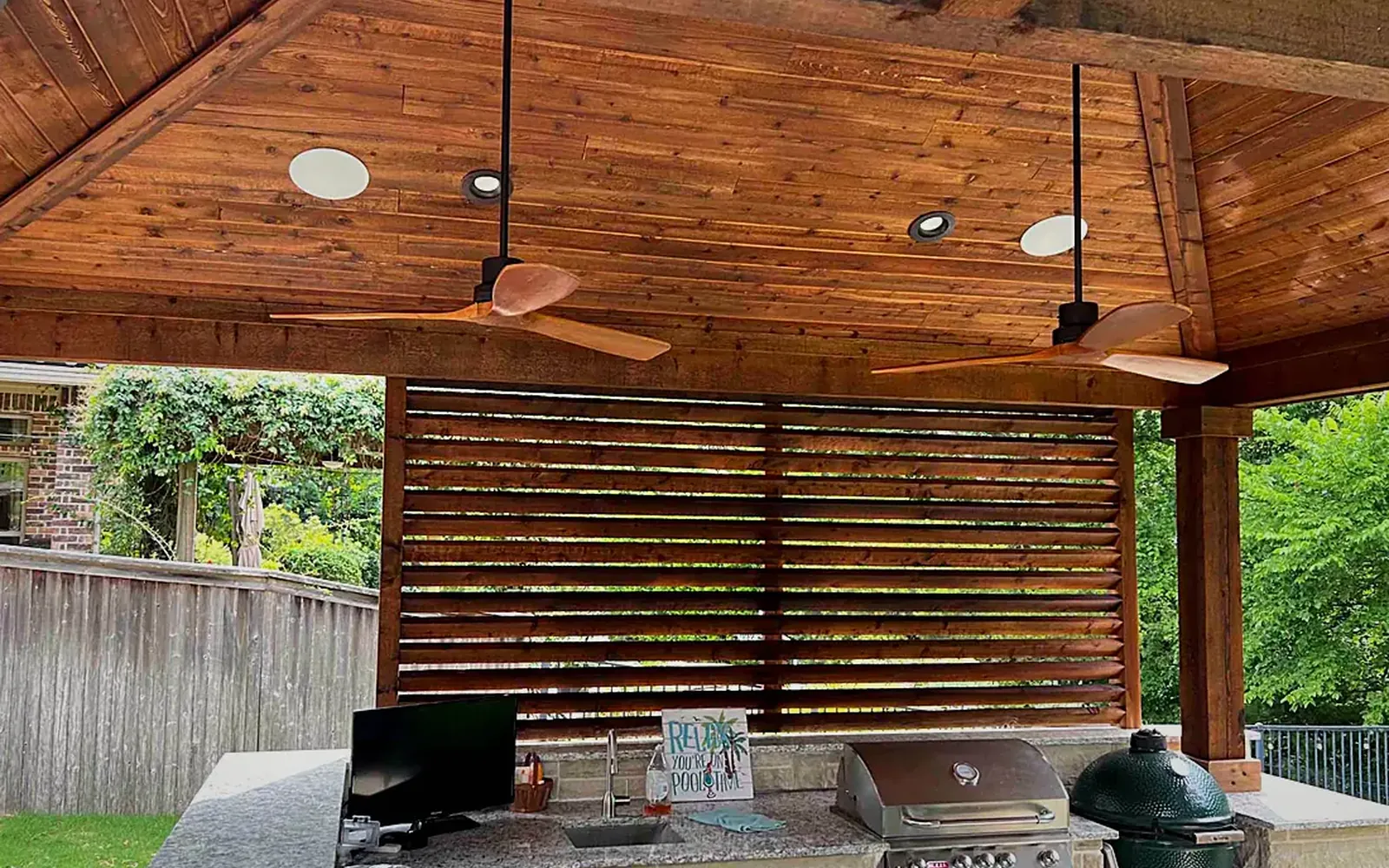
- Match the speaker to the spot. Under a covered patio with a finished ceiling, flush ceiling speakers disappear and behave exactly as they do indoors. On open walls, small surface-mount speakers under the eave cover the area directly below. In planting beds and along paths, landscape satellites on short stakes and rock-style speakers sit at knee height, where the sound reaches the listener before it reaches anything else.
- Respect the landscaping. Dense shrubs absorb sound, pergolas and stone walls reflect it, so we plan from the landscape drawings as well as the house plan.
Once the speakers are in, each one is tuned for its position and distance, and the zones are balanced so one volume control gives an even result.
Why bass matters more outdoors
Bass is the first thing a backyard loses. Low frequencies need surfaces to build on and there are none, so a satellite speaker playing alone sounds thin. The common reaction is to turn it up, which brings back every problem from the first section.
The answer is a dedicated subwoofer, usually buried in a planting bed with only a small vent showing. Because low frequencies are not directional, one or two well-placed subwoofers can underpin a whole zone. The satellites are freed to handle the voices and the detail, the music sounds full at a low level, and the overall volume can come down rather than go up. On a landscape system we treat the subwoofer as part of the basic design, not an upgrade.
Low bass travels further than treble, so placement and limits matter. A subwoofer against the fence line will be felt next door. One placed toward the center of the yard, tuned to the size of the space and capped at a sensible level, is heard where you want it and nowhere else.
One system, inside and out
A backyard system that needs its own app is a system that gets used less. The outdoor zones belong on the same platform as the rest of the house, so the music in the kitchen follows you out the back door, and the patio keypad that dims the lights also picks the playlist.
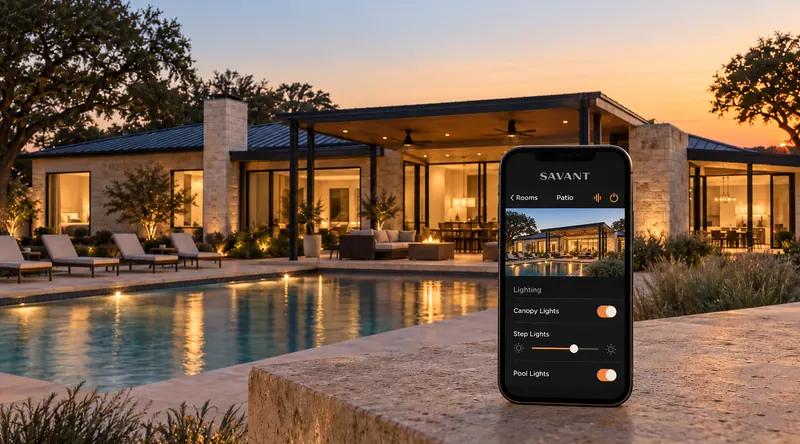
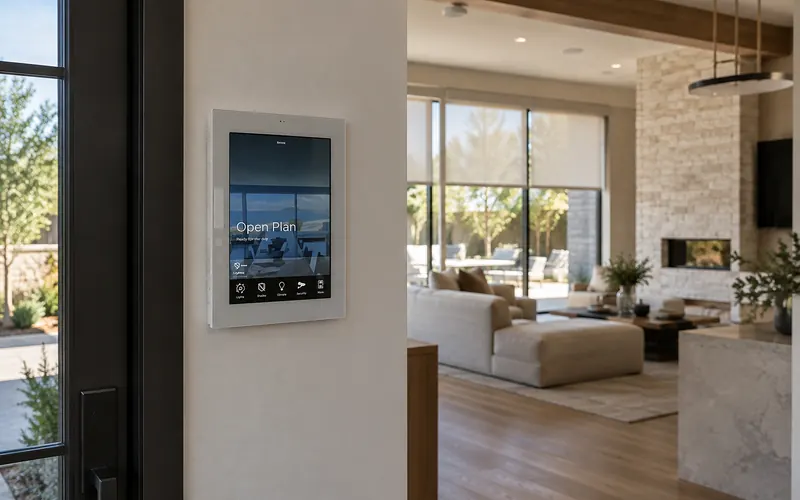
On a whole-home audio platform such as Savant, the outdoor zones sit next to the indoor ones on the same screen. You can group the patio and the pool for a party, send the game audio to the outdoor kitchen while the lawn stays on music, or mute everything outside with one press. Scenes do the rest, the way they do for the systems people automate first: an evening scene brings up the landscape lighting, sets the patio to a warm level and starts the music low; a goodnight scene turns it all off at a set hour so nobody has to remember.
This is also where the neighbors are protected by design rather than by good intentions. Outdoor zones can carry a maximum volume that is set once and cannot be exceeded from any remote, and a schedule that lowers that ceiling after a chosen hour. A guest can turn it up, but only as far as you have decided. The same thinking applies when a screen joins the patio; see our outdoor TV article.
What to do next
If you are building or renovating, raise outdoor audio while the landscape plan is still on paper. Conduit under the paving, cable to the far corners and power for a buried subwoofer cost very little before the ground is finished and a great deal after it. Our outdoor work is planned alongside the landscape lighting for that reason: the trenches are the same, and architects and landscape designers prefer both on one drawing.
In an existing yard, most of the same system can be installed with shallow cable runs through beds and along the fence. Start by listing where people actually sit, cook and swim. That list, not the speaker catalog, is the design. If you want a second opinion on it, WH Technologies will look at the plan with you before anything is bought.
What homeowners automate first, and why it sticks
How light changes the way a home feels
Do smart homes need pre-wiring? What to run before drywall
Are all LED tape lights the same?
Why lighting design should be your first design decision
Five ways motorized shades uniquely benefit Texas homes
I have a dog. That's enough security, right?
The beginner's guide to energy management for Texas homeowners
Don't count wired out: when hybrid home networks work best
4 critical areas to consider in a home theater design
Why hire a professional for your home theater installation
Why your backyard needs a proper outdoor TV installation
Is it time to upgrade your lighting? Five signs the answer is yes
Why you should trust a professional installer with home automation

Music and light: the two systems that decide how a restaurant feels
Ready for technology that simply works?
Design, installation and support by one team in Allen, serving Dallas-Fort Worth since 2019.