

Energy management in a Texas home comes down to three questions. What is using power right now, what must stay on when the grid goes down, and what can wait for a cheaper hour. Answer those and the equipment choices, from monitoring to batteries to the car charger, mostly make themselves.
This guide is for homeowners starting from zero. It explains why the Texas grid makes this worth doing, then walks through the pieces in the order we usually add them.
Why Texas is different
Texas runs its own power grid, largely separate from the rest of the country, which means that when demand outruns supply there is little help from the neighbors. Demand peaks on summer afternoons, when every air conditioner in Dallas-Fort Worth is running at once, and the grid operator asks households to conserve through the hottest hours. Winter is the other risk. An ice storm can take down lines and generation for days, as North Texas has learned more than once, and an all-electric home with no backup is cold within hours.
The third factor is price. Most of the metro area is on the retail electric market, where you choose a plan, and many plans charge different rates at different hours: free nights, cheaper weekends, or prices that follow the wholesale market. Under those plans the same kilowatt-hour costs far more at five in the afternoon than at two in the morning. Energy management is the discipline of moving what you can to the cheap hours, keeping what matters running through the bad days, and knowing the difference.
Start by measuring
The first purchase is a monitor, not a battery. A circuit-level energy monitor sits in or beside the main panel and reports what every circuit is drawing, live and over time, to an app. Within a week it answers questions most people have guessed at for years. How much of the bill is the air conditioning. What the pool pump costs to run through the afternoon. Whether the second refrigerator in the garage earns its keep. What the house draws at three in the morning when nothing should be on.
The data changes behavior without anyone trying. Once you can see the pool pump running through the expensive hours, you move it. Once you see the water heater cycling all evening, you schedule it. Monthly reports show whether the changes stuck. For a power and energy plan this is also the design input: the size of a battery or a generator starts from the real loads of your house, not from a rule of thumb.
Decide what must stay on
Backup power is the part most Texas homeowners come to first, usually right after an outage. The decision is not which battery to buy. It is which circuits you cannot be without. For most homes the list is shorter than expected: the refrigerator, the network and the equipment rack, the furnace blower or one zone of heat, a few lights, the garage door, and the office or medical equipment that cannot stop. Backing up that list for a day or two needs a much smaller system than backing up the whole house with the air conditioning running.
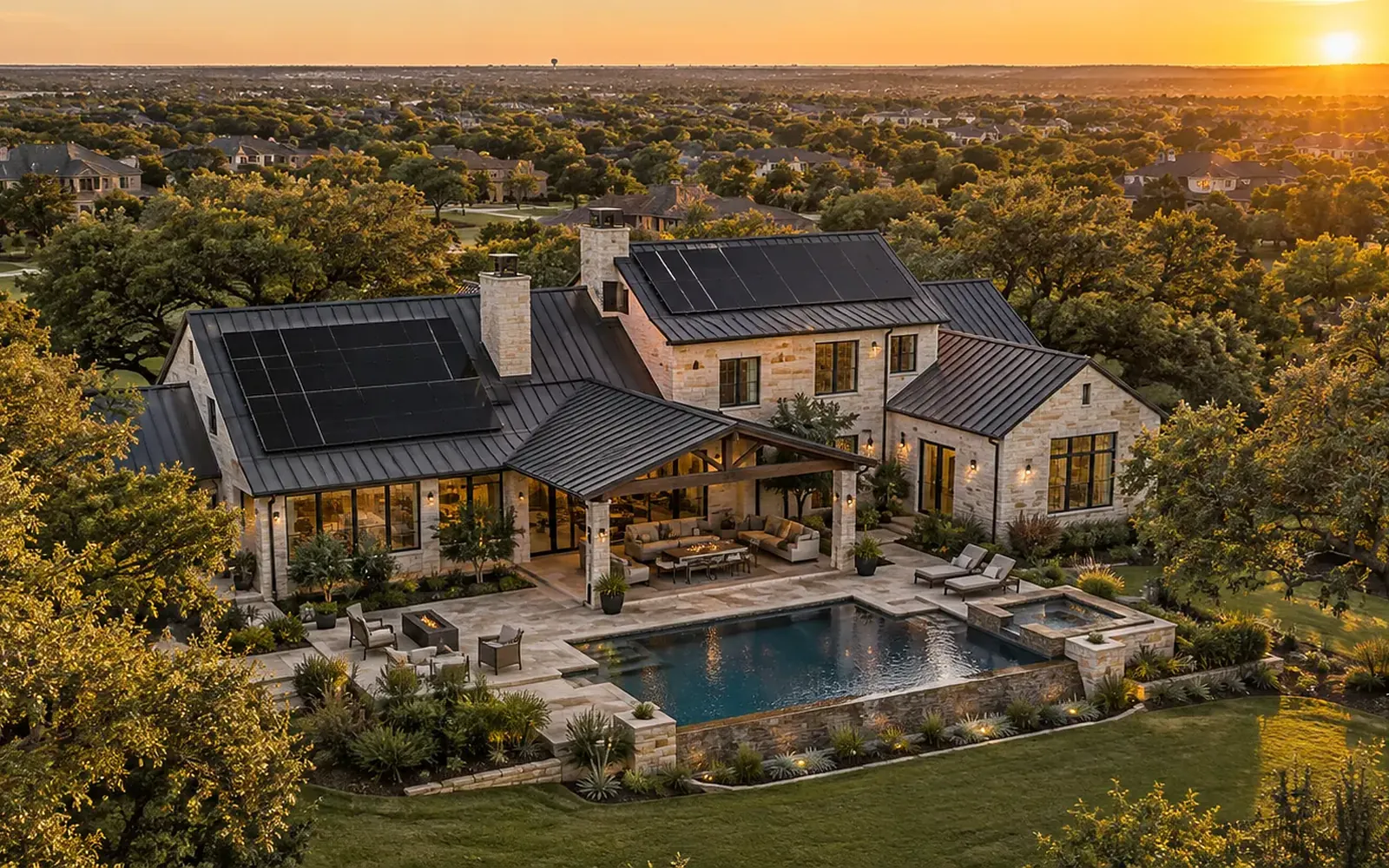
There are three sources, and they combine. A battery switches over in a fraction of a second, silently, and covers the short outages that make up most of the year. A standby generator runs for days on natural gas and covers the long ones. Solar refills the battery during the day, which turns a battery that would last one night into one that can carry a home through a multi-day event. The transfer between them is automatic. You learn about an outage from a notification, not from the lights going out.
Load management: what makes a battery last
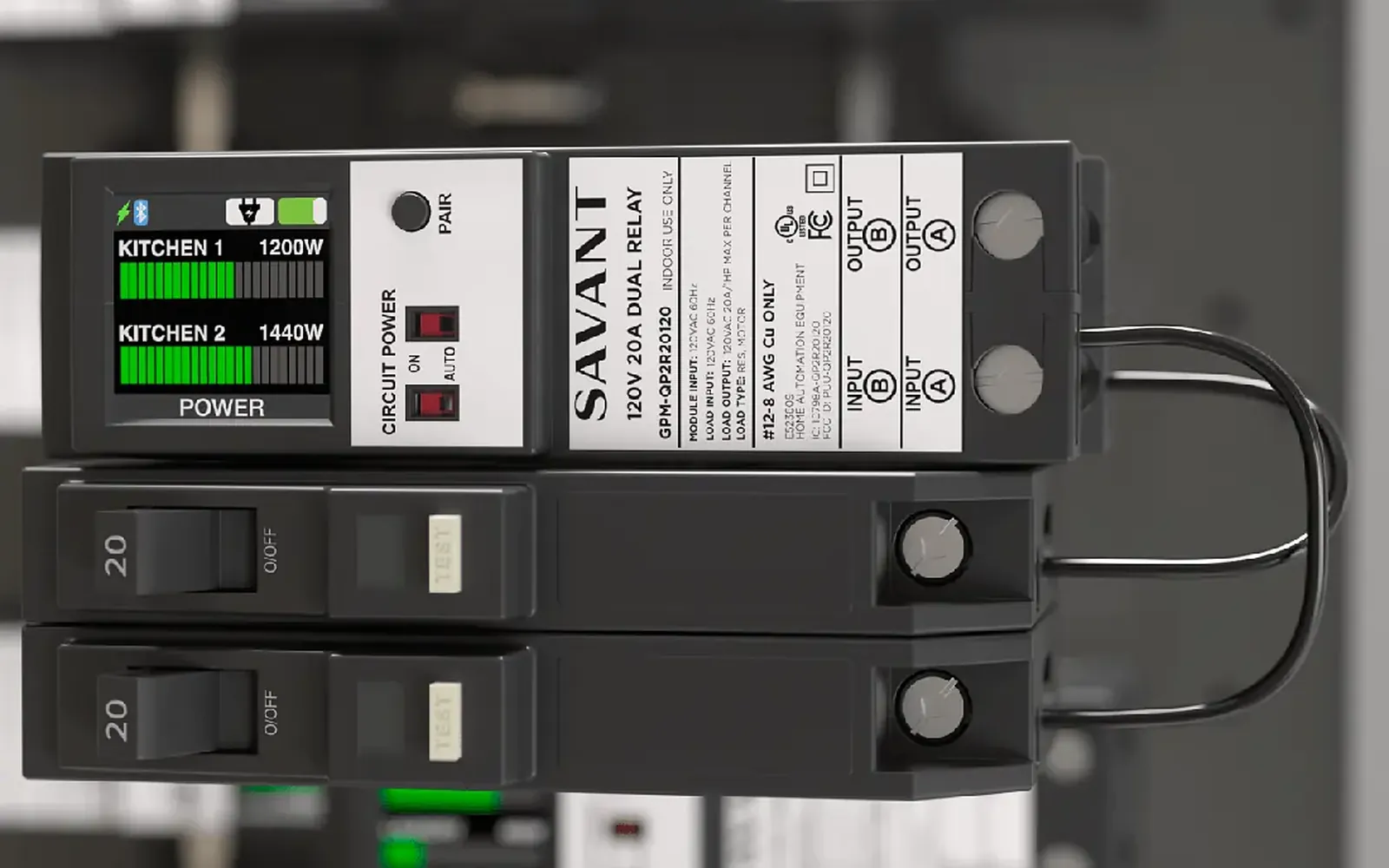
A battery sized for the essentials behaves like a whole-home system when the house is smart about what it runs. Load management means the panel itself can switch individual circuits. During an outage it sheds the big loads automatically, the dryer, the oven, the pool pump, the second air conditioner, so the battery carries what matters for far longer. When the grid returns, everything comes back in sequence rather than all at once.
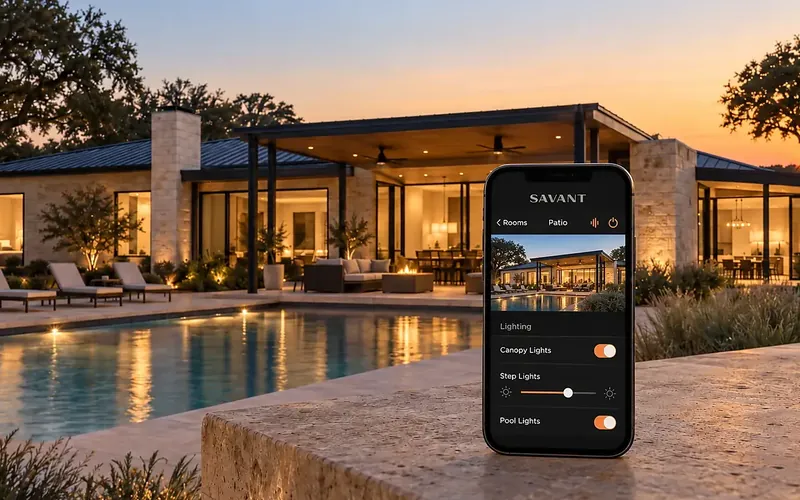
The same switching works on an ordinary day. On a time-of-use plan, the water heater, the pool pump and the car charger run in the cheap window and stay off in the expensive one. When the grid operator calls for conservation on a hot afternoon, the house can respond without anyone reading the alert. With Savant power modules in the panel, each circuit is monitored and switchable from the same app that runs the lights, so a scene called Storm Mode or Peak Hours is one press, or no press at all.
EV charging without the panel upgrade
An electric vehicle is often the largest single load ever added to a house, and it arrives on a circuit the panel was never planned for. The usual advice is a service upgrade, which in a finished home is slow and expensive. Managed charging is the alternative. A charger on a monitored circuit charges at full speed when the house is quiet, backs off when the oven and both air conditioners are running, and stops during an outage so it does not drain the battery that is keeping the refrigerator cold.
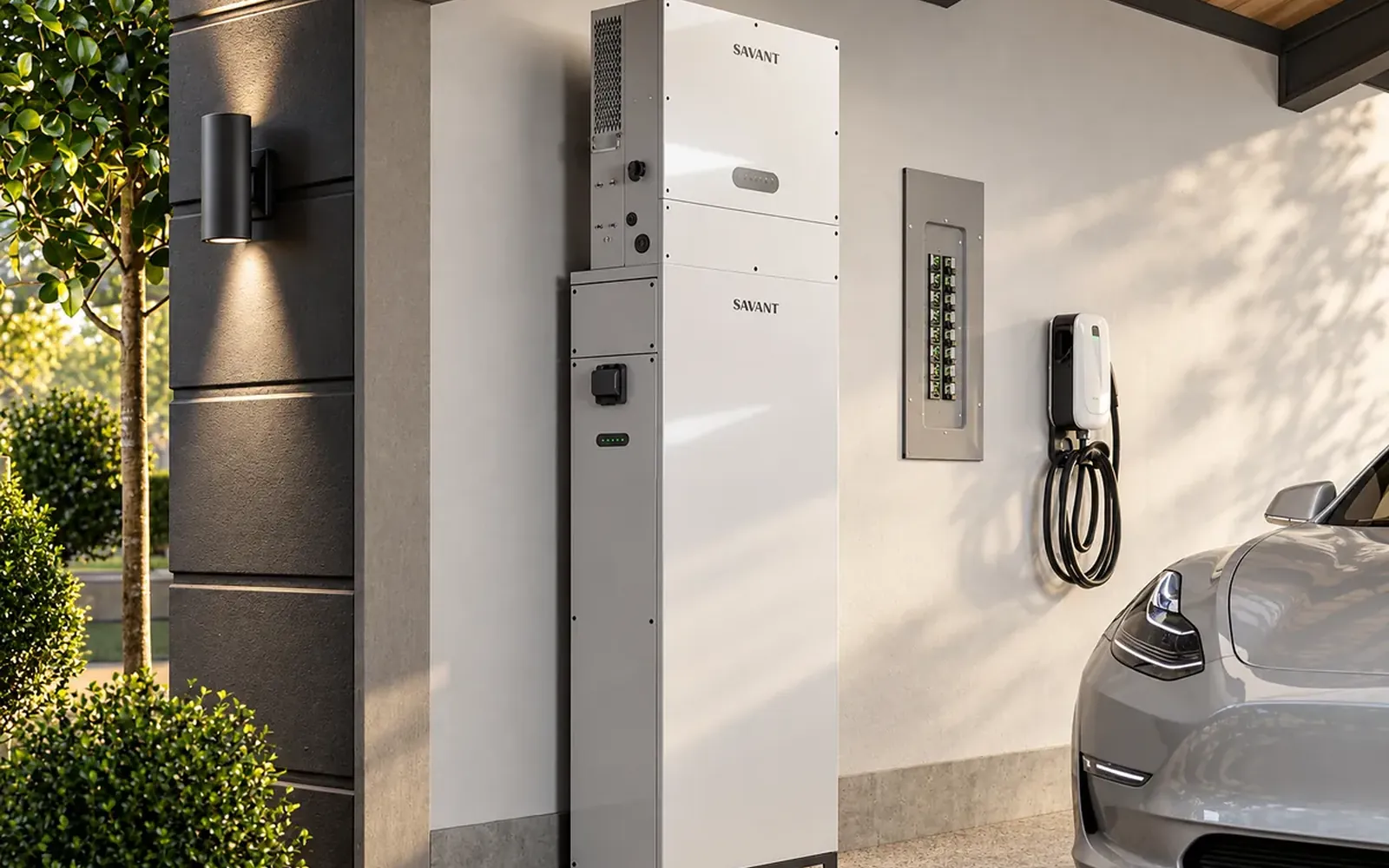
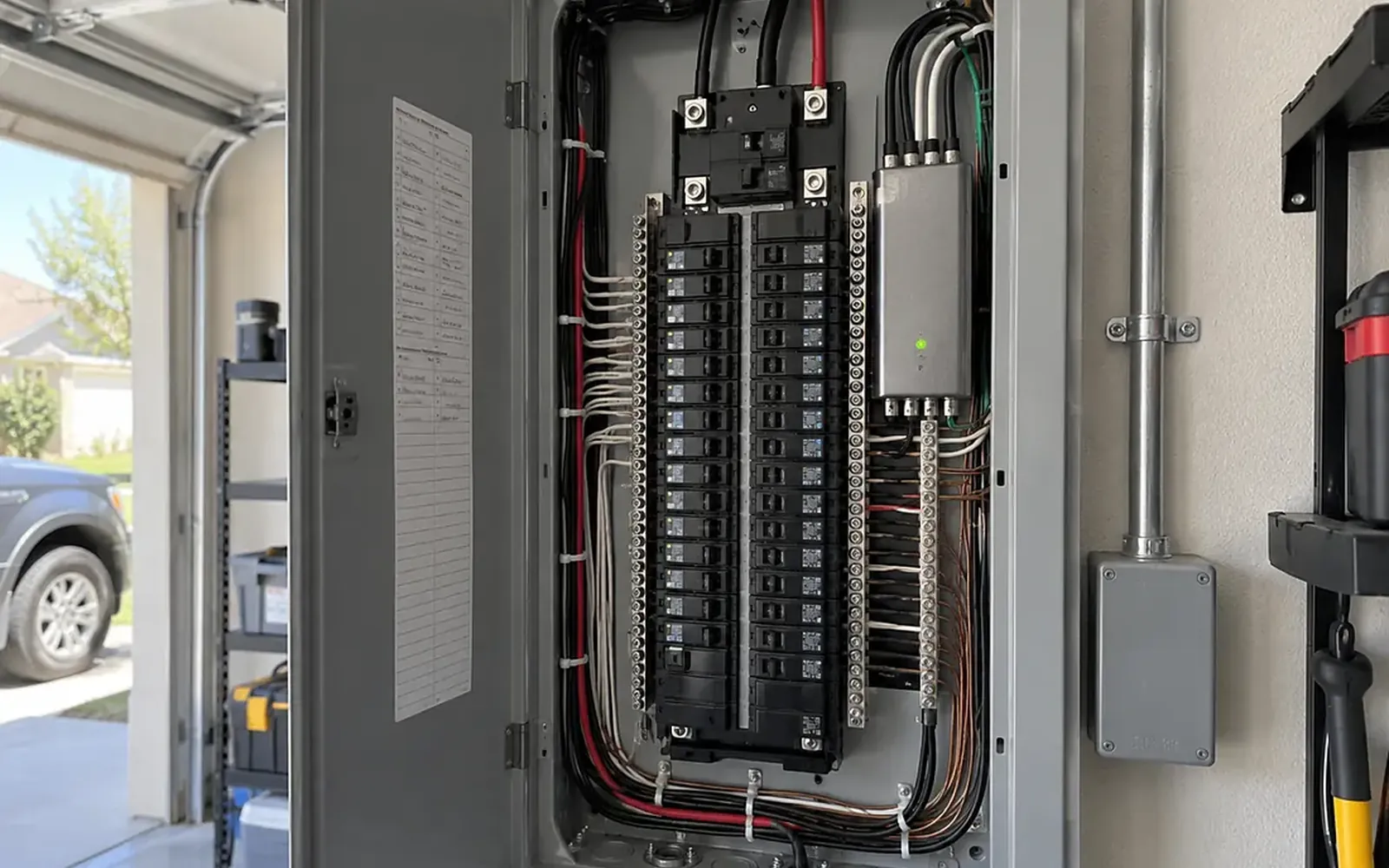
It also charges at the right time. On a free-nights plan, a car that plugs in at seven in the evening and starts charging when the cheap window opens costs very little to run. The garage becomes the center of the energy system: panel, battery, charger and the monitoring behind them on one wall, labeled, with room left for whatever comes next. In a new build we ask builders for that wall space and the conduit early, because adding it later means opening finished drywall.
How it fits the rest of the home, and where to begin
None of this lives in its own app for long. When power sits on the same platform as the rest of the home, the Away scene sets the thermostat back and pauses the water heater, the shades drop ahead of the afternoon sun to shrink the cooling load, and the network and the cameras stay on through an outage because they are on the protected circuits. The pieces help each other, which is why we design them as one system at WH Technologies rather than as separate purchases. Our article on what homeowners automate first shows where energy sits in that order.
Start with the monitor; it costs the least and informs everything else. Then write the list of what must stay on, in order of importance. Decide whether you want hours of silent battery, days of generator, or both. If you are building, hold the panel space, the conduit to the roof and the garage wall now, before the walls close. And remember the quiet partner in all of this: motorized shades cut the cooling load before any battery has to carry it.
What homeowners automate first, and why it sticks

How light changes the way a home feels
Do smart homes need pre-wiring? What to run before drywall

Are all LED tape lights the same?

Why lighting design should be your first design decision

Five ways motorized shades uniquely benefit Texas homes
Outdoor audio done right: how many speakers do you really need?
I have a dog. That's enough security, right?
Don't count wired out: when hybrid home networks work best
4 critical areas to consider in a home theater design

Why hire a professional for your home theater installation

Why your backyard needs a proper outdoor TV installation

Is it time to upgrade your lighting? Five signs the answer is yes
Why you should trust a professional installer with home automation

Music and light: the two systems that decide how a restaurant feels
Ready for technology that simply works?
Design, installation and support by one team in Allen, serving Dallas-Fort Worth since 2019.