
Guests judge a room before the menu arrives. They notice whether they can hear each other, whether the light flatters the table or interrogates it, whether the bar sounds like a bar and the dining room sounds like dinner. None of this is on the plate, and all of it decides whether they stay for dessert and come back.
Music and light are the two systems that set that feeling, and in most restaurants they are the two systems nobody designed. A speaker in each corner, a bank of dimmers behind the host stand that only one manager understands. This article is about doing both properly, and about making them simple enough that the staff never has to think about them.
The room speaks first
Sound and light are the first things a guest experiences and the last things they can put into words. A room that is too loud feels stressful; a room that is too quiet feels empty even when it is half full. Light that is too bright makes people eat faster and leave sooner; light that is too dim makes the menu unreadable and the food look flat. The target is a room that feels like the concept: lively at the bar, warm at the table, unhurried on the patio.
Getting there is not a matter of taste alone. It is zones, schedules, coverage and scenes, and it is the same discipline whether the venue is a neighborhood bistro in Plano or a hotel restaurant in Uptown.
Zones: the bar is not the dining room
The first decision in a distributed audio design is to split the venue into zones that can each have their own source and level. Bar, dining room, private room, patio and restrooms are the usual five. The bar can run a livelier playlist a few steps louder; the dining room sits underneath conversation; the private room can be silent for a speech or run its own music for a party; the patio gets the same feel as inside, at a level that works outdoors.
Zones also solve the argument that happens in every restaurant with a single volume knob: the bar wants it up, the couple at table twelve wants it down, and the manager gets both complaints. With zones, both are right.
Volume that follows the day
A restaurant is a different room at noon, at seven and at eleven. Lunch wants light, quick, low music. Dinner wants warmth and a little energy. Late wants the bar to lead. A control system runs those changes on a schedule so they happen without anyone remembering: the level rises gently through the evening, the playlist changes with the service, and the patio drops to a neighborly level at the hour the lease or the city requires.
Schedules are also the quiet fix for the loudest problem in the business, which is staff turning the music up over the course of a shift. When the system resets the levels at each service, the room stays where the owner set it.
Coverage beats volume
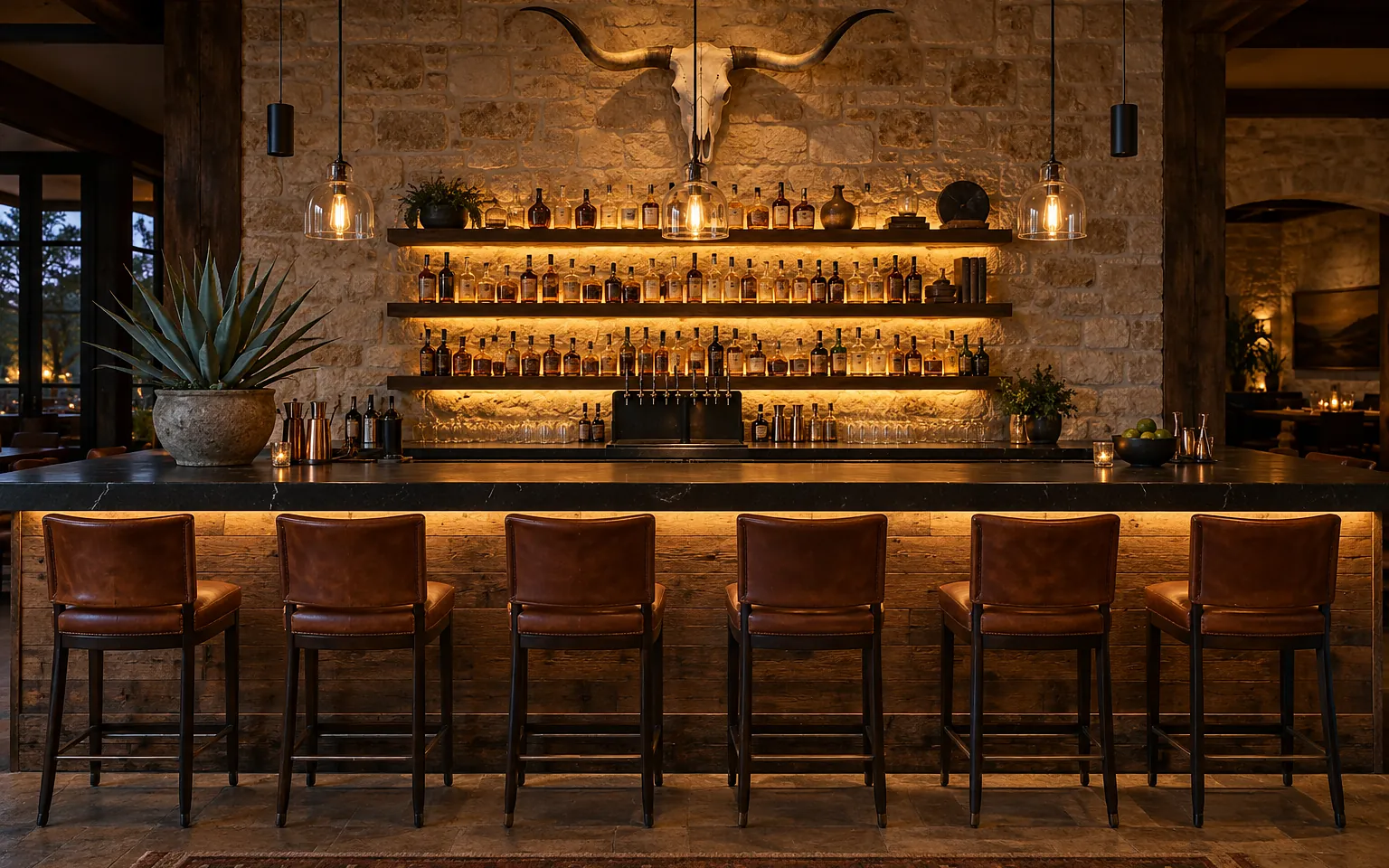
The single most common mistake in restaurant audio is too few speakers turned up too loud. Two speakers at one end of a room mean the tables near them are shouting and the tables at the far end hear nothing. The fix is more speakers at lower levels: flush in-ceiling speakers spaced evenly across the dining room, pendant speakers over the bar where the ceiling is high or open, and small surface speakers under the patio roof.
Even coverage is what makes a room feel full of music at a level where people can still talk. It is also easier on the staff, because nobody is standing under a speaker for eight hours. Subwoofers, hidden in a bar cabinet or the ceiling void, give the music its body without the level going up.
Lighting scenes by service
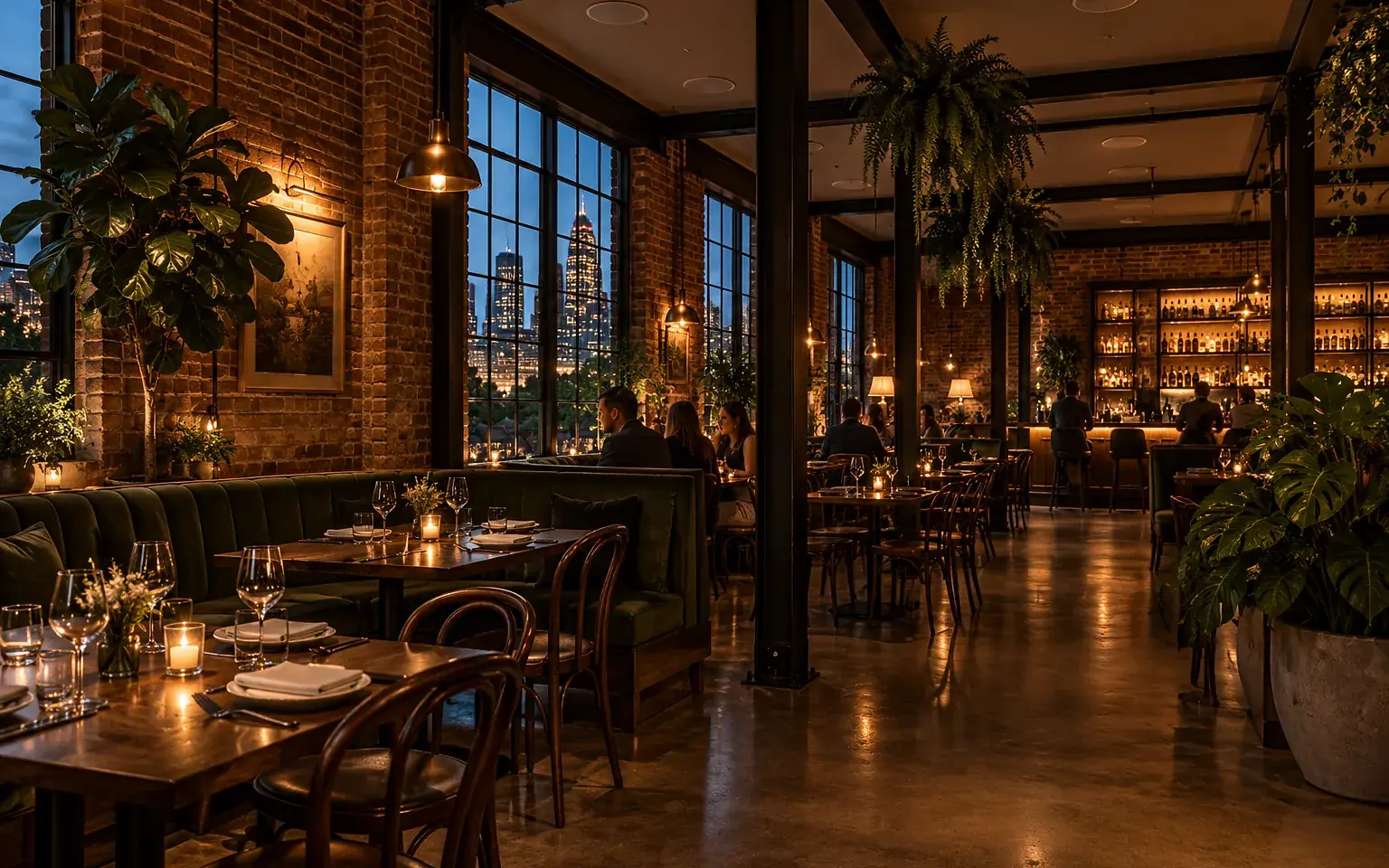
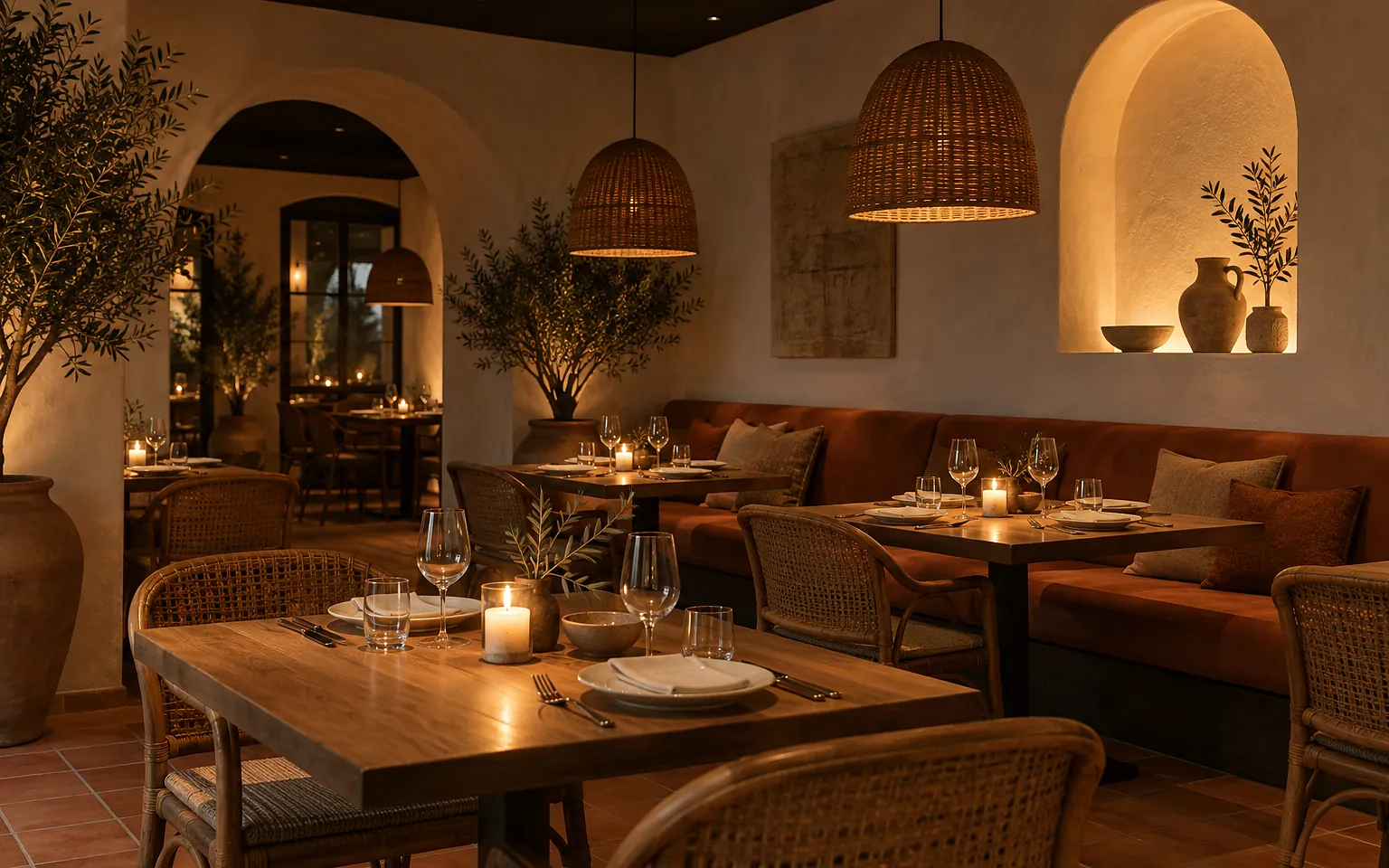
The lighting side follows the same logic. A commercial lighting control system stores a scene for each part of the day and runs them on the clock: Lunch is bright and neutral so the room reads clean and the menu is easy. Dinner brings the downlights down, hands the tables to the pendants and candles, and lets the accent light on the walls, the bar and the bottle shelves do the work. Late drops the room further and leaves the bar as the brightest point. Close brings the cleaning lights up at full for the crew.
Because the scenes are stored, the room looks the same on a Tuesday with a new host as it did on opening night. Nobody is guessing at dimmers, and nobody can accidentally leave the dining room in cleaning mode during dinner.
Warmth, dimming and the candle test
Dinner light should be warm, in the 2700K range, and it should be able to dim smoothly to very low levels without flicker or a sudden drop-out. Warm dim fixtures, which shift toward candlelight as they dim, are made for this. The test is simple: at the dinner scene, a candle on the table should look like it belongs, not like the only warm thing in a cool room.
Two details make or break the effect. First, glare: guests should never look up into a bright source, so downlights are deep and aimed at the table, not the eyes. Second, the food: a high color rendering fixture over the pass and the tables makes the plate look the way the kitchen intended. It is a small specification decision with a large effect on photographs, and every table takes photographs now.
The patio is a room too
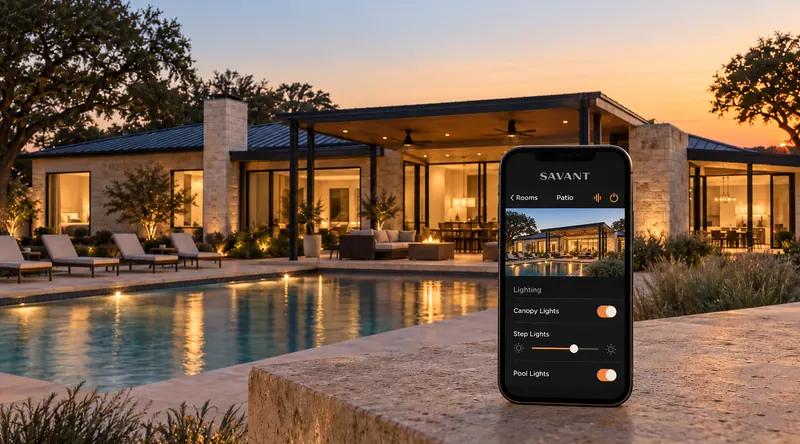
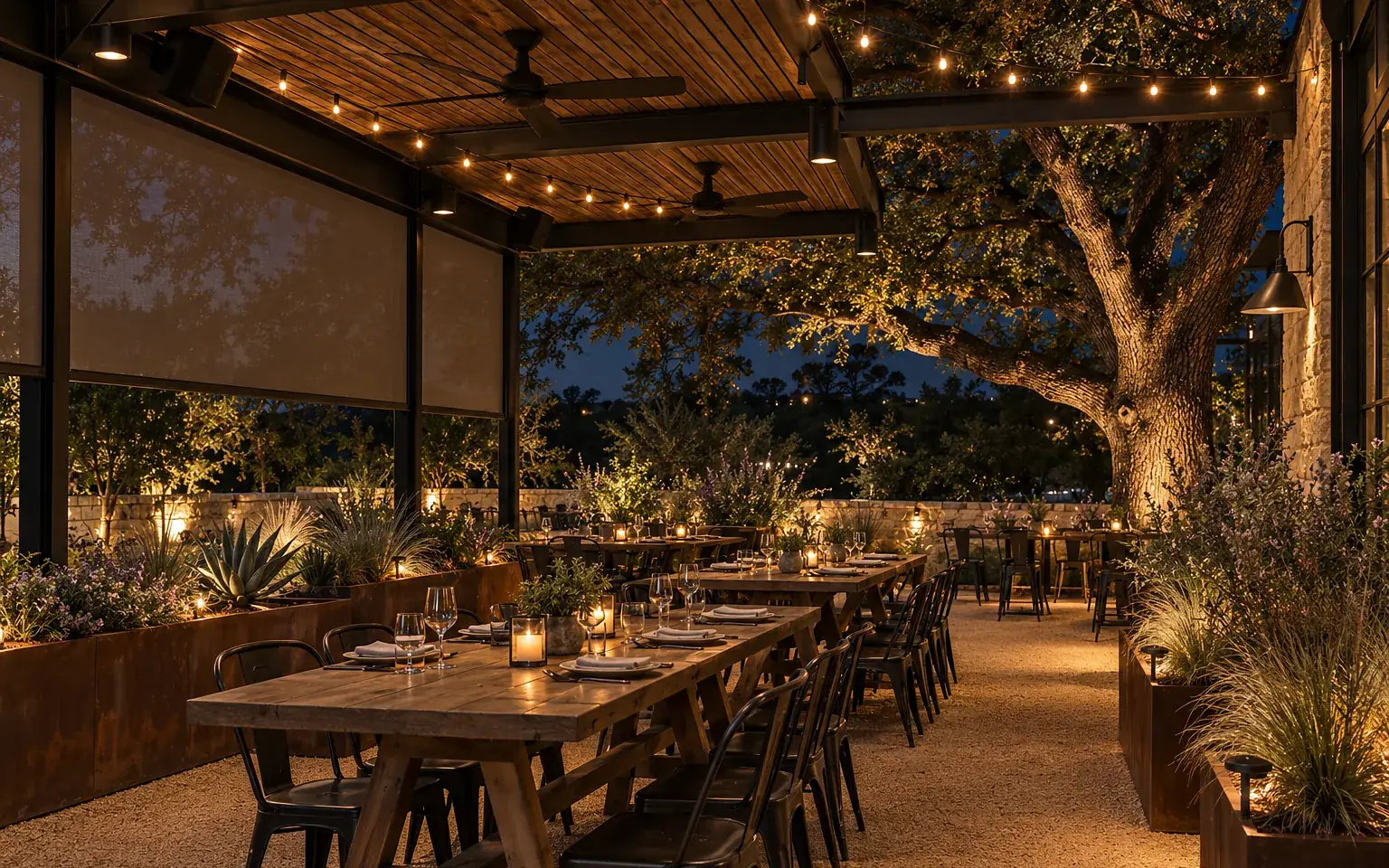
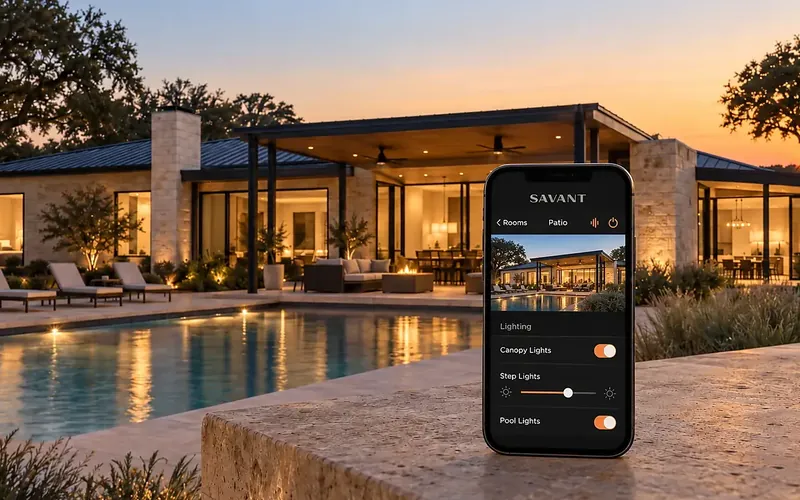
In Texas the patio can be the biggest dining room in the building for eight months of the year, and it is usually the worst served. Music comes from one speaker by the door; lighting is a string of bulbs and a floodlight. Outdoor systems treat the patio as a full zone: weatherproof speakers spaced under the roof, warm string and downlights on the same scenes as inside, shade-readable televisions where the concept calls for them, and motorized screens that block the low western sun during the early dinner seating without closing the space.
Make it one button for the staff
All of this only works if it is simpler than what it replaces. The standard we design to is a single keypad at the host stand and one behind the bar, with engraved buttons that match the services: Lunch, Dinner, Late, Close, and a Private Room button if there is one. A manager's phone or tablet can adjust a zone when a party asks, and the system returns to the schedule afterward.
The same building automation platform can carry the televisions, the shades, the thermostat and the exterior signage, so opening and closing become one press each. Staff turnover stops being a technology problem, because there is nothing to learn.
Can a new host open the restaurant on a Sunday morning with one button, and can the closing manager shut it down with one? If not, the system is still too complicated.
Five things that go wrong
- Bar music in the dining room. No zones, so the whole venue runs at the level of the loudest space.
- Two speakers, ten tables. Coverage so uneven that the level is wrong everywhere.
- Television audio leaking. Sports on the bar screens with the audio fighting the playlist, instead of a proper zone that switches cleanly.
- Dimmers as decoration. A wall of sliders nobody adjusts, so the room is at the same level at noon and at midnight.
- The patio as an afterthought. One speaker, one floodlight, and the best seats in the house empty after dark.
Planning it into a build or renovation
Every item above is far cheaper to do while the ceiling is open. Speaker positions, low-voltage wiring, lighting circuits and the location of the equipment rack belong on the drawings next to the kitchen layout. On a renovation, the same plan can be phased around service so the venue never closes for the technology.
Our commercial overview shows how audio, lighting, video, shading and control fit together in offices, restaurants, retail and hospitality across Dallas-Fort Worth. If you are planning a venue, the best first step is a site visit while the drawings can still change.
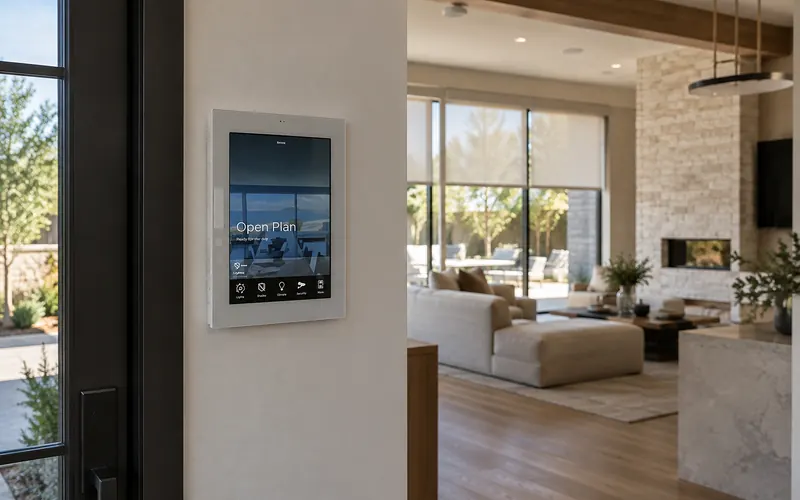
What homeowners automate first, and why it sticks
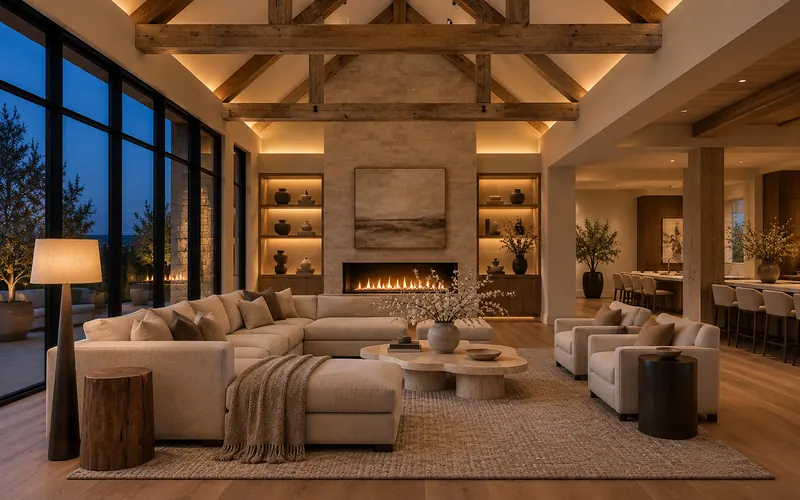
How light changes the way a home feels
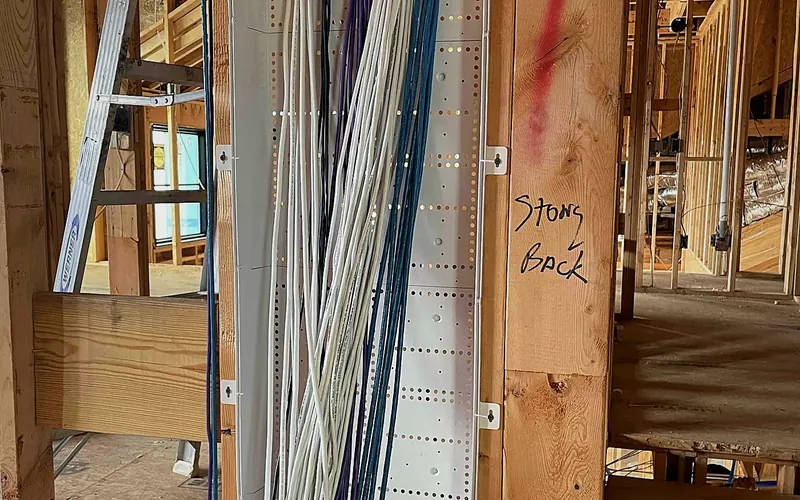
Do smart homes need pre-wiring? What to run before drywall
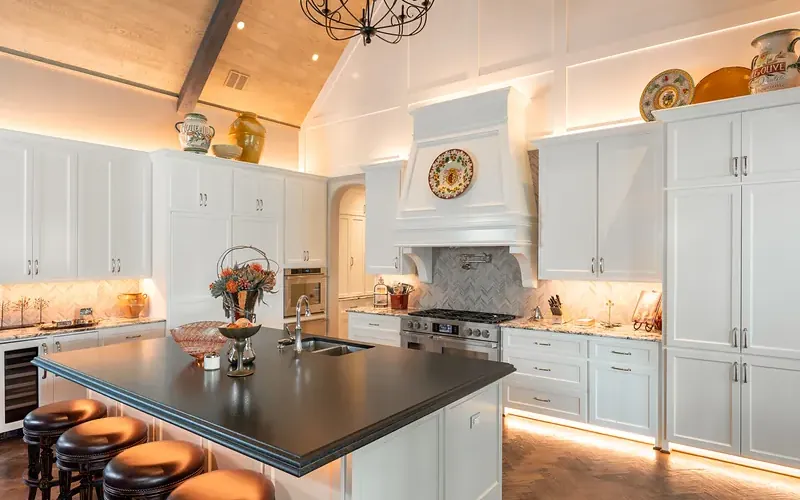
Are all LED tape lights the same?
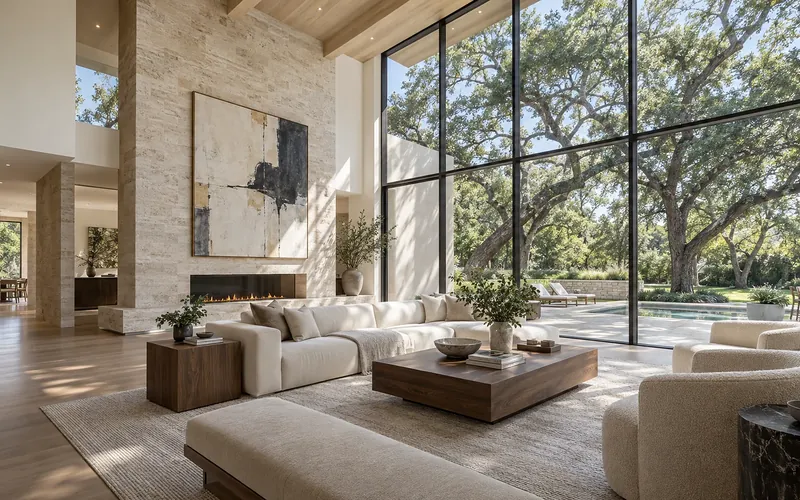
Why lighting design should be your first design decision
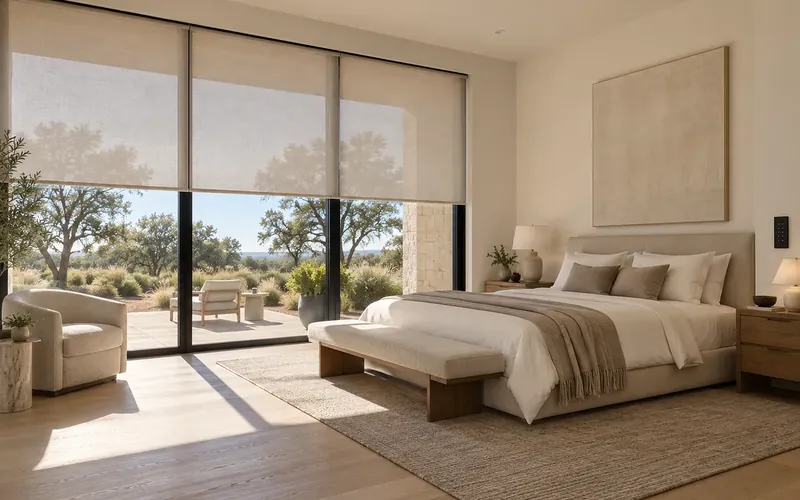
Five ways motorized shades uniquely benefit Texas homes
Outdoor audio done right: how many speakers do you really need?
I have a dog. That's enough security, right?
The beginner's guide to energy management for Texas homeowners
Don't count wired out: when hybrid home networks work best
4 critical areas to consider in a home theater design
Why hire a professional for your home theater installation
Why your backyard needs a proper outdoor TV installation
Is it time to upgrade your lighting? Five signs the answer is yes
Why you should trust a professional installer with home automation
Ready for technology that simply works?
Design, installation and support by one team in Allen, serving Dallas-Fort Worth since 2019.