
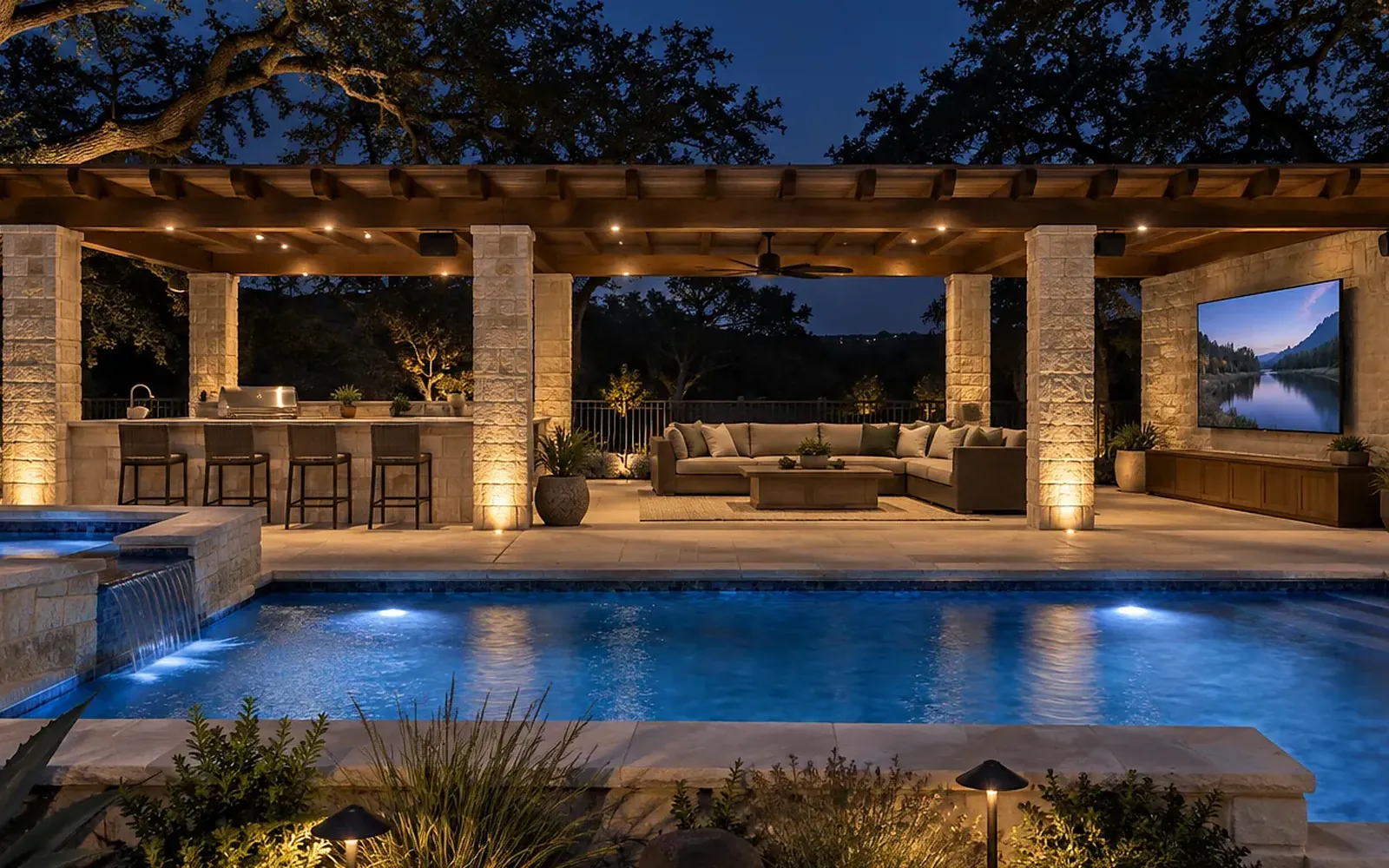
An outdoor TV is the difference between a patio you use and a patio you look at. In Dallas-Fort Worth the backyard is usable most of the year, and the evenings people actually spend out there, games, movie nights, Sunday afternoons by the pool, all need a screen that can live in the heat. An indoor set under the roof will do for a season. A proper outdoor display, placed, powered and connected with care, becomes a room.
Why an indoor TV does not survive outside
Every spring someone asks whether the old living room TV can go out on the covered patio. It can, for a while. The patio roof keeps the rain off, but it does nothing about the rest.
Heat is the first problem. A dark enclosure on a covered patio in August sits well above the temperature an indoor panel is designed for, and the electronics cook slowly. Humidity is the second. Warm, damp air gets inside the chassis, cools overnight and condenses on the circuit boards. Dust, pollen and insects follow the same path. The third problem is light. An indoor panel is made for a dim room; against a bright yard the picture turns gray and the reflection of the pool takes over the screen.
The result is predictable. The picture fades, the set starts rebooting on hot afternoons, and within a year or two it fails. The warranty does not cover any of it. Outdoor-rated displays exist because the environment is genuinely different, not because the label is.
What an outdoor TV actually does differently
A true outdoor display is built as a sealed appliance. The panel sits in a weatherproof chassis with the ports protected, the cooling is designed for high ambient temperatures, and the electronics are rated for the swing from a winter night to a summer afternoon.
Beyond the housing, three things separate a good outdoor TV from a good indoor one.
- Brightness. Outdoor panels are far brighter than living room sets, because they compete with daylight rather than a lamp. The right rating depends on where it goes: a full-shade model for a deep covered patio, a partial-sun model for a pergola or an open wall.
- Anti-glare glass. The front surface is treated to scatter reflections instead of mirroring the pool and the sky. This matters as much as brightness. A bright panel behind glossy glass is still unwatchable at four in the afternoon.
- Picture quality that holds up. The current generation gives you 4K and HDR, so the game or the film looks as good out here as it does in the family room, and a dark scene is not lost to ambient light.
Brands such as Seura build in all three. The work is in matching the model to the exact spot, because a partial-sun panel on a full-sun wall is still a mistake.
Where the screen goes and what it faces
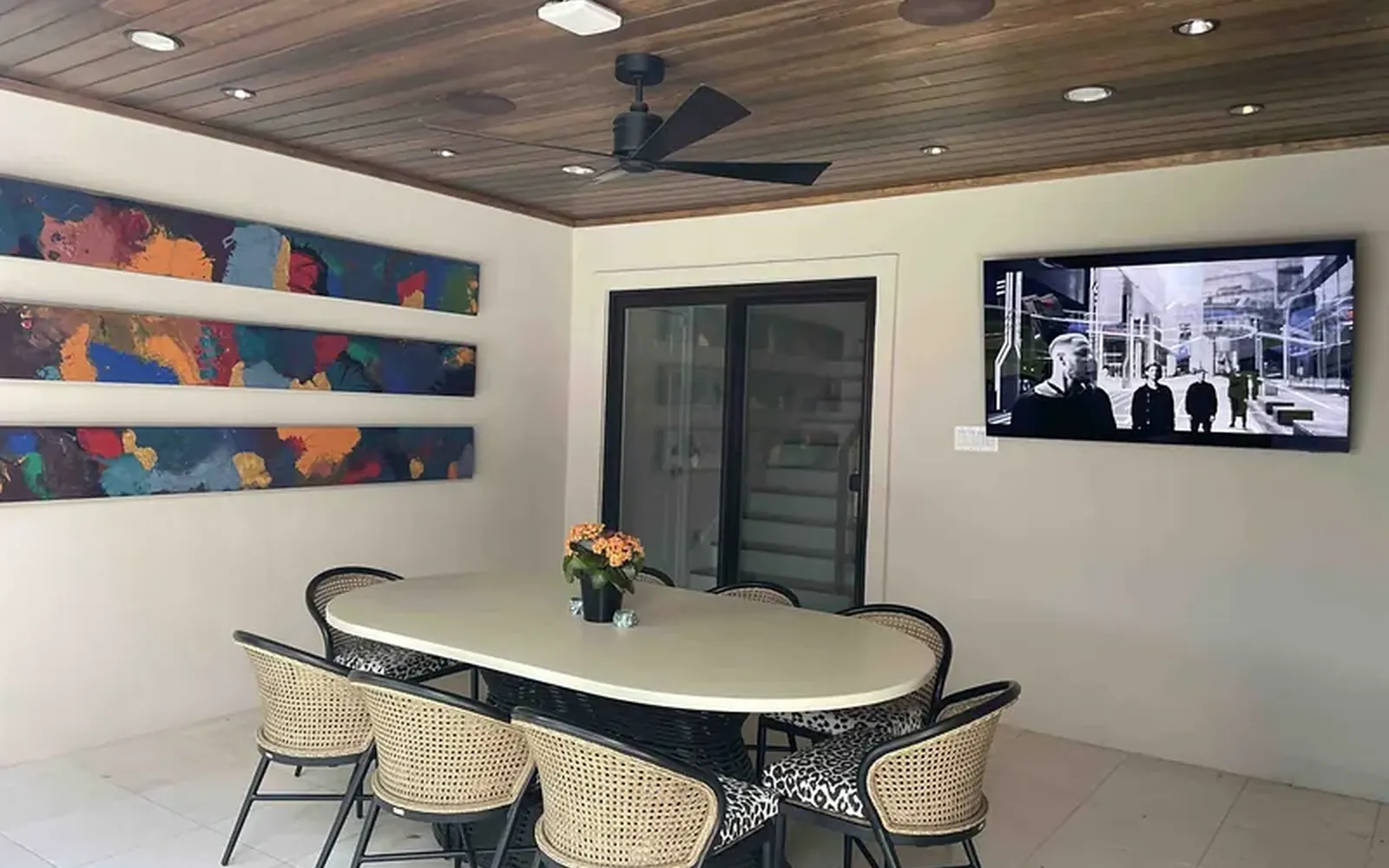
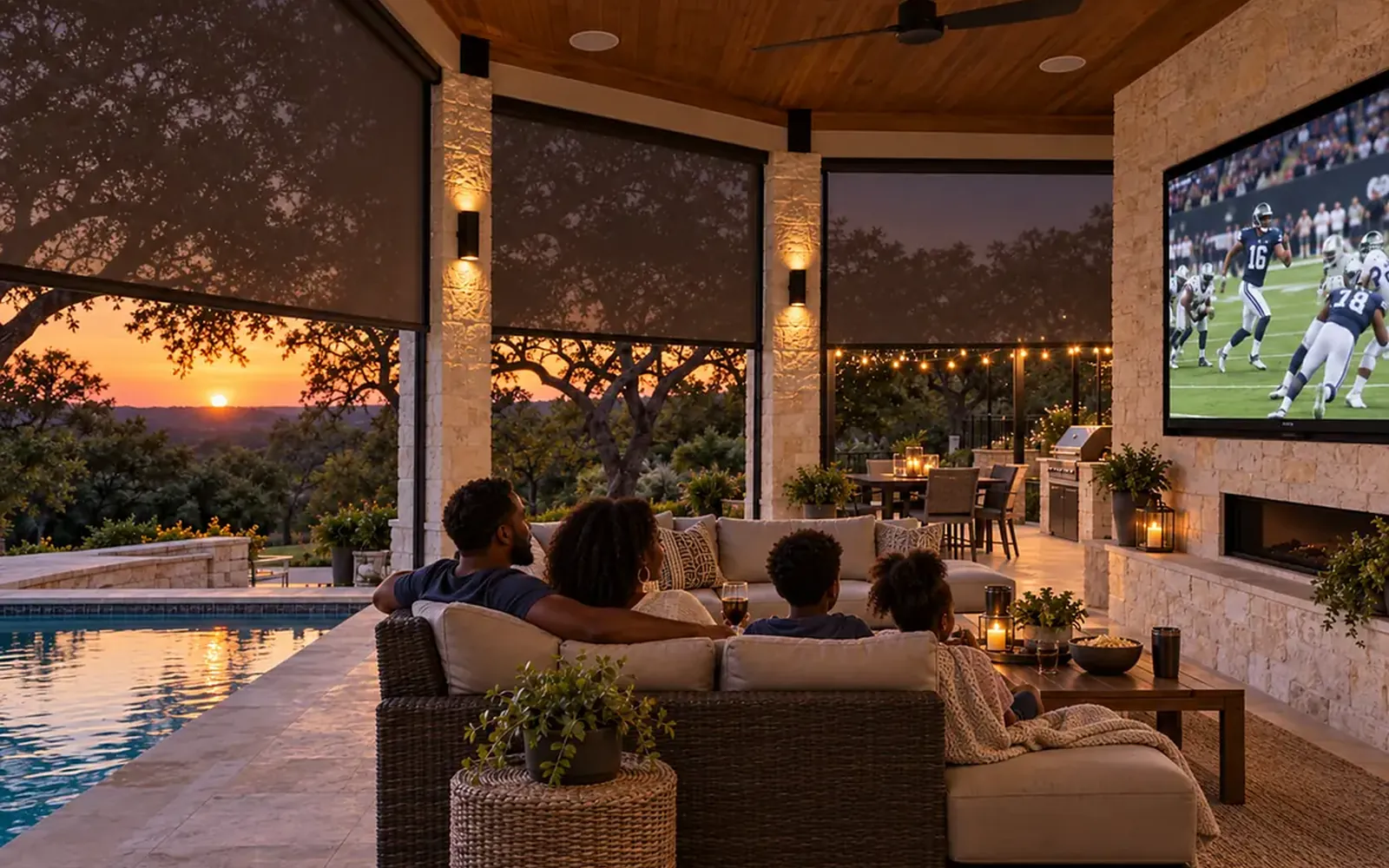
Where the screen goes decides whether it gets watched. The first rule is to keep direct sun off the panel and, ideally, off the people watching it. In North Texas the afternoon sun comes from the west, so a screen on the west wall facing east is usually the right call: the panel sits in shade and the viewers have the sun behind them.
Then the practical points. Viewing distance sets screen size, and outdoors people sit further away than they expect, so the panel usually ends up larger than the one indoors. Mounting height follows how the space is used: lower for a dining table or a seating group, higher for a pool deck where people are standing or in the water. A tilting or articulating mount lets the screen angle toward the pool in the afternoon and back toward the table for dinner.
The parts you do not see matter most. The display needs a dedicated weatherproof outlet, a hardwired network connection wherever possible, and a cable path sealed against water. We run those in conduit before the patio ceiling or the stone goes on, because a clean run added later means opening finished work. On an open pergola or a pool wall, a weatherproof enclosure or a motorized lift from Nexus21 can hide the screen entirely when it is not in use, which is also the best protection from hail.
Sound, and why the TV speakers are not enough
A TV's own speakers are tuned for a room with walls. Outdoors they are thin at any volume and lost under a pool pump or a breeze. The usual fix is to turn the TV up, which means the neighbors hear the commentary and nobody hears the dialog.
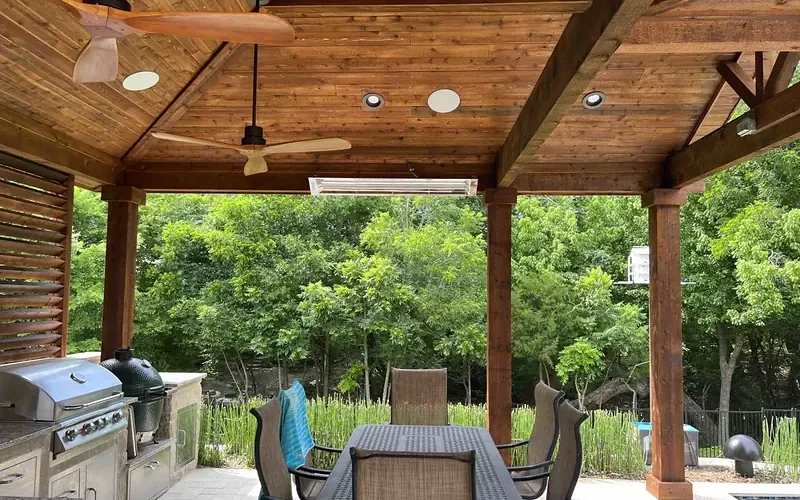
The better answer is to treat the screen as a source for the outdoor audio system, not as a speaker. A pair of flush ceiling speakers under the patio roof, or an outdoor soundbar below the panel, carries the audio at a modest level to the people watching. If the yard has distributed landscape speakers, the game can play through the patio zone while the pool keeps its music. The principle is the one we use for all outdoor sound: more speakers playing quietly, each one close to the listener. There is a longer explanation in our outdoor audio article.
Part of the house, not a gadget on the wall
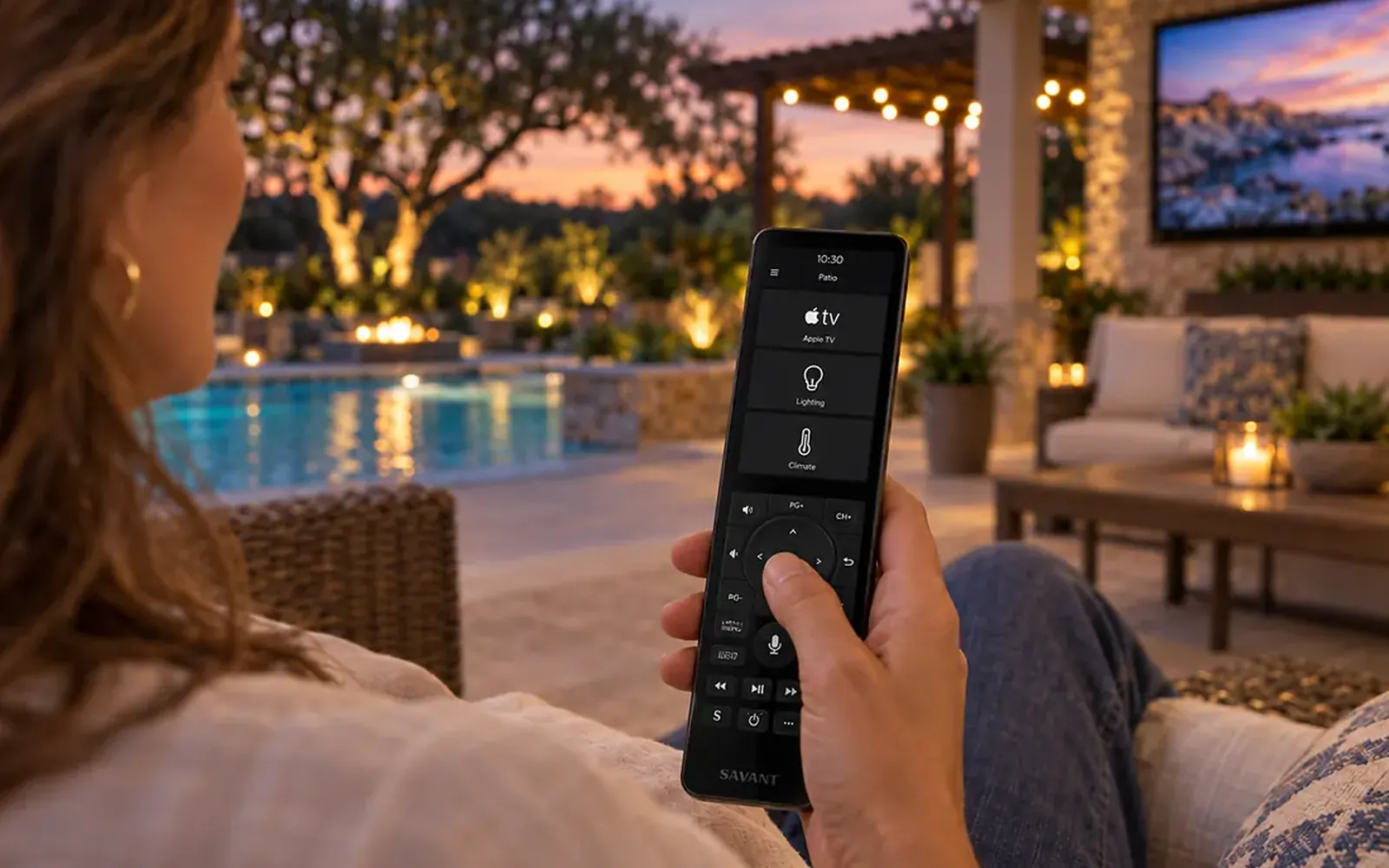
The outdoor TV people actually use is the one that works like every other screen in the home. The same remote, the same sources, the same streaming apps, no separate box to find and no second password to remember.
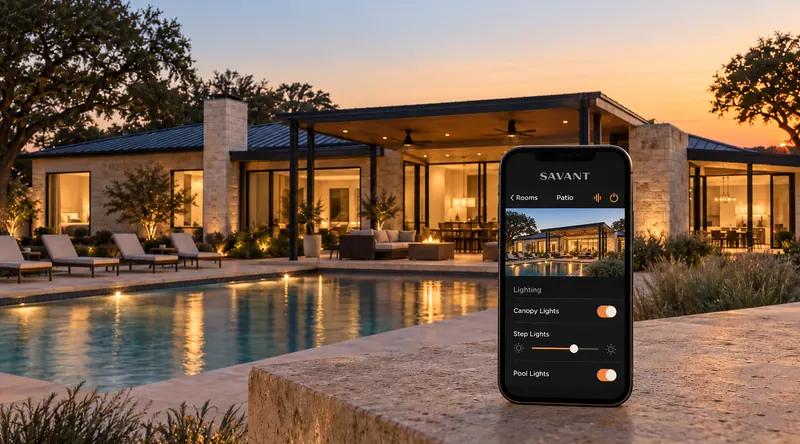
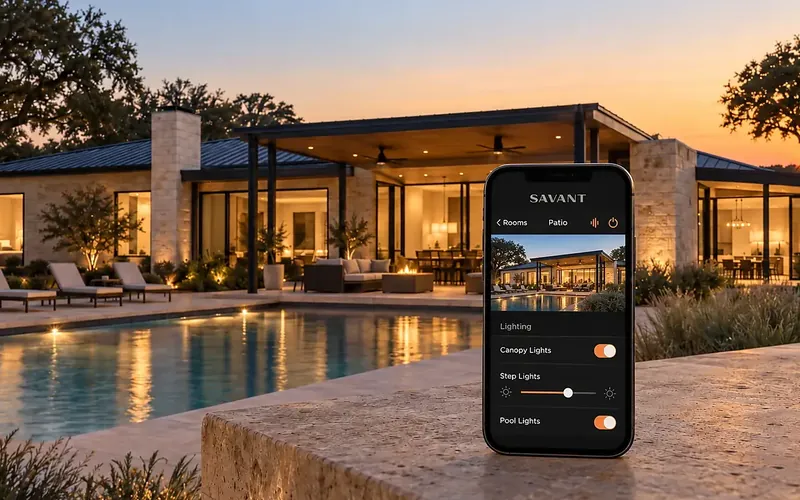
On a whole-home platform such as Savant, the patio display is simply another room. The movie server or cable box in the rack can be sent outside, the game can be on the patio screen while the family room watches something else, and one button on the patio keypad turns on the display, picks the source, sets the ceiling speakers and dims the patio and landscape lighting to an evening level. When the household goes to bed, the Goodnight scene turns the patio off along with everything else, which is the kind of habit we describe in what homeowners automate first.
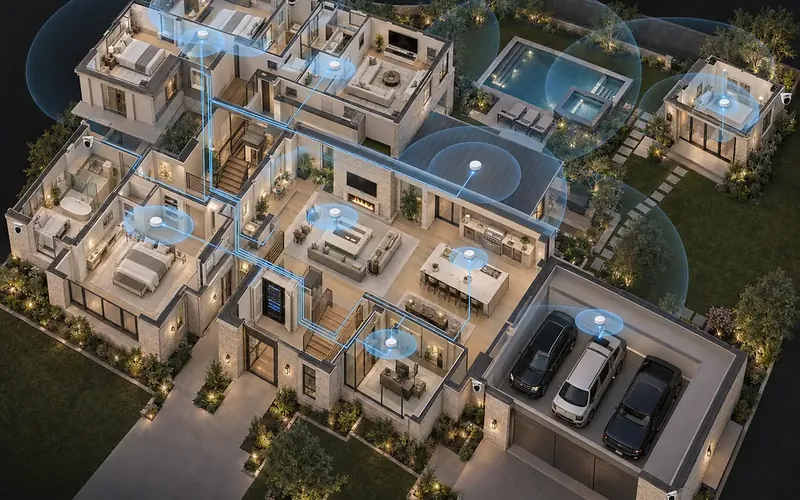
What makes this reliable is the network. Streaming at 4K outdoors over a Wi-Fi signal that has fought its way through brick and glass is where most patio setups fall down. A hardwired connection to the display, or an outdoor-rated access point on the patio, is a small line item that removes the single most common complaint. We design the network with the outdoor zones in the plan from the start, not added after the first dropped stream.
What to do next
If you are building a new home or a new outdoor living area, decide on the screen location before the patio ceiling is framed, and have the conduit, power and data run then. Ask the builder to include it in the drawings, or ask us to coordinate with them. If the patio already exists, we start with a site visit at the time of day you expect to use it, because glare and shade are easier to see than to describe.
Either way, think of the display as part of an outdoor room: the shade, the seating, the lighting and the sound. The screen is the easy part. Making it feel like it was always there is the work, and it is where WH Technologies spends most of its time on a patio project.
What homeowners automate first, and why it sticks
How light changes the way a home feels
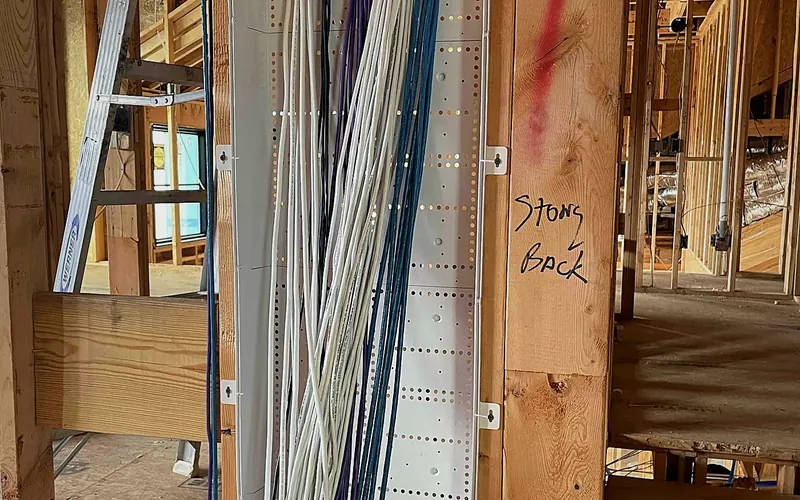
Do smart homes need pre-wiring? What to run before drywall
Are all LED tape lights the same?
Why lighting design should be your first design decision
Five ways motorized shades uniquely benefit Texas homes
Outdoor audio done right: how many speakers do you really need?
I have a dog. That's enough security, right?
The beginner's guide to energy management for Texas homeowners
Don't count wired out: when hybrid home networks work best
4 critical areas to consider in a home theater design
Why hire a professional for your home theater installation
Is it time to upgrade your lighting? Five signs the answer is yes
Why you should trust a professional installer with home automation

Music and light: the two systems that decide how a restaurant feels
Ready for technology that simply works?
Design, installation and support by one team in Allen, serving Dallas-Fort Worth since 2019.